Sam CJ
Hard Science Fiction
Temple of the
bird men
A thousand years after a cataclysm wipes our technological civilization off the face of earth, scholars from an agrarian kingdom try to interpret a strange object found buried in the ground.

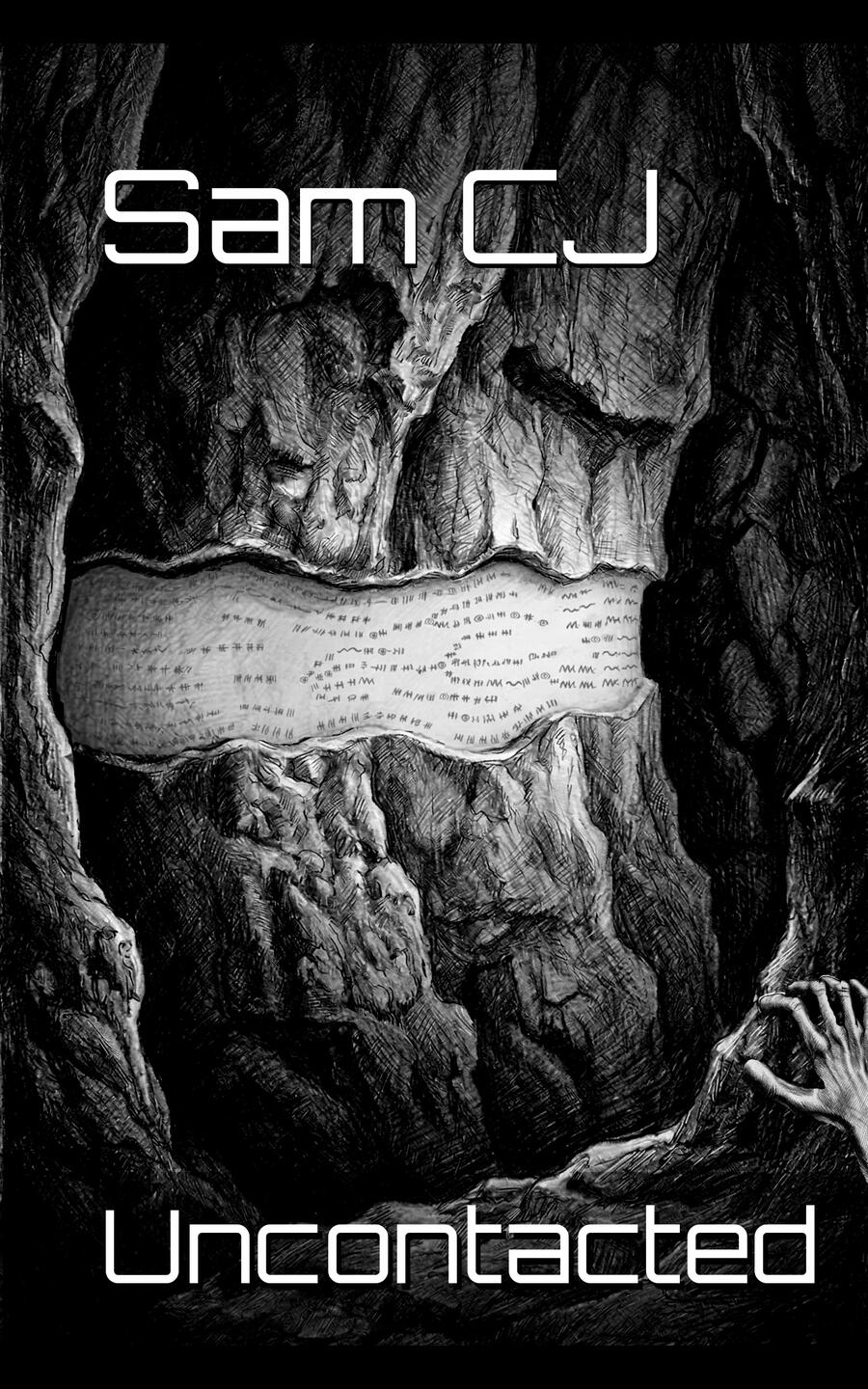
Uncontacted
An accident deep in the Siberian taiga reveals something that shouldn't be there. Humanity's first encounter with two alien intelligences. No aliens required.
Coming next...
There are more stories to tell. More worlds, more challenges, more questions that science alone can't answer. Find out more about what comes next.
Contact Me
Yes, I know that one of my books is titled Uncontacted, but that doesn't mean you can't contact me.Click the Mail icon below and let me know what's on your mind.If you are a student, or on a tight budget, but would still like to read my books, do drop me a mail.
Temple of the Bird Men
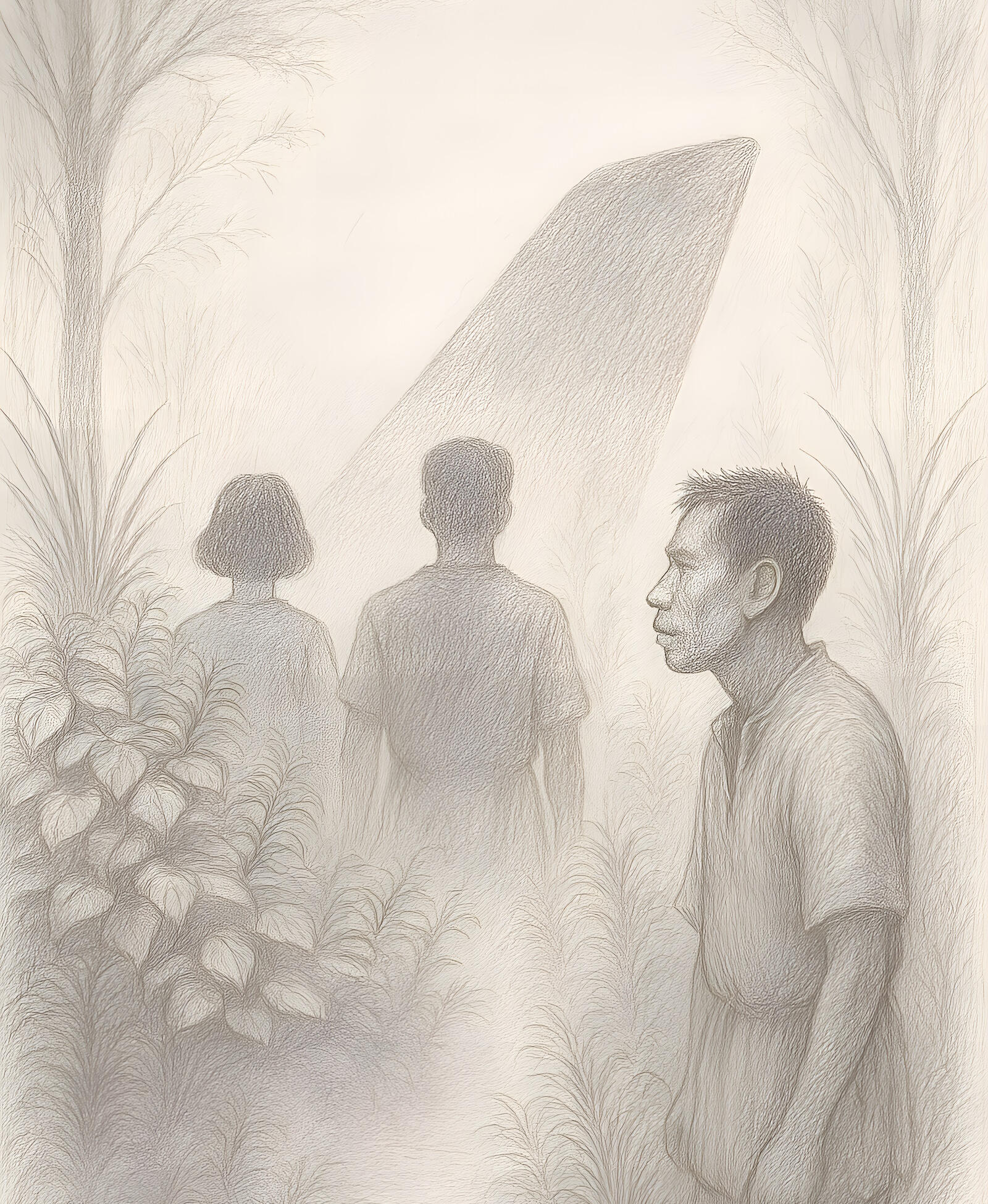
A Thousand Years Later…
After a devastating catastrophe wipes out human civilization, leaving barely a few million survivors across the globe, humankind has to start from the beginning.A thousand years after the catastrophe, a nascent pre-industrial civilization struggles to build a stable kingdom in what used to be the Malayan peninsula. The glorious cities of Singapore and Kuala Lumpur have been wiped from memory. The towers that challenged the clouds had been toppled by the earthquakes radiating from the point of impact, reaching 9.6 on the Richter scale. The rubble is buried under the rich, arable soil deposited by the tsunami that followed.A farmer from the Southern Shangee province, the present-day Changi in Singapore, finds something strange during his search for a source of water - what appears to be a giant metal sail sticking out of the ground. When the news of his discovery is brought to the attention of the king, a set of events is set in motion that threatens to change the balance of power that has kept the kingdom together for centuries.
Uncontacted
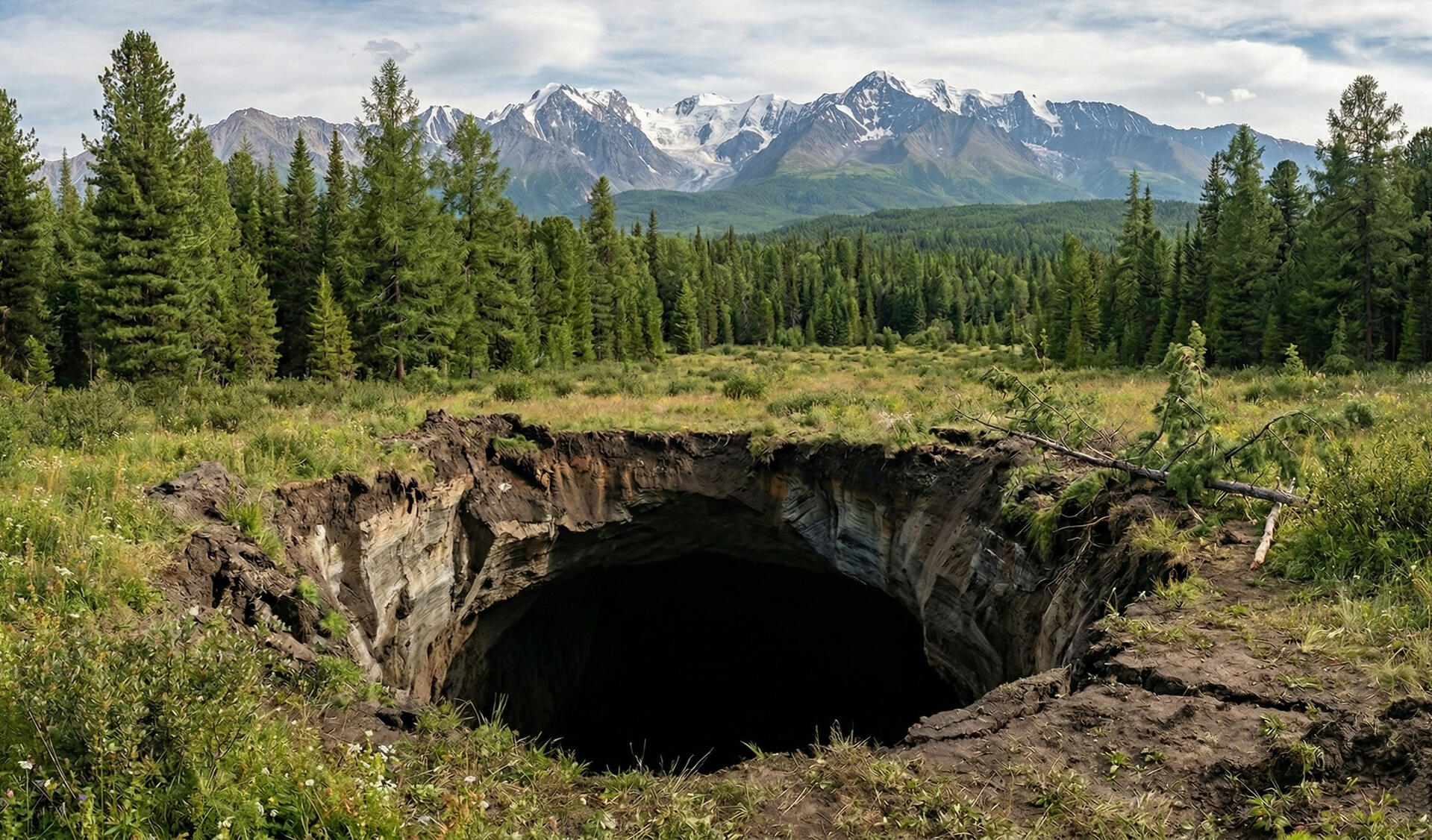
In 2036, a group of students on an overland camping trip in the Siberian wilderness vanish without trace. One of them reappears days later, delirious, the only survivor. The story she tells makes no sense. And yet one of the wealthiest people on the planet wants to believe every word of it.In a world ground down by financial collapse and political fracture, academia is woefully underfunded, except where it serves the interests of the ultra-wealthy. AI, longevity research, genetic engineering — anything that extends the lives of those who hold power, or extends their reach.Vera would never have imagined that paleoanthropology would fall into that category. And yet the enigmatic trillionaire wants a specialist in extinct human species on the team. Why? He doesn't know either. His AI made the selection and it can't explain why.A half a million for a few weeks chasing a fever dream. Why not?
Some stories aren't yet told
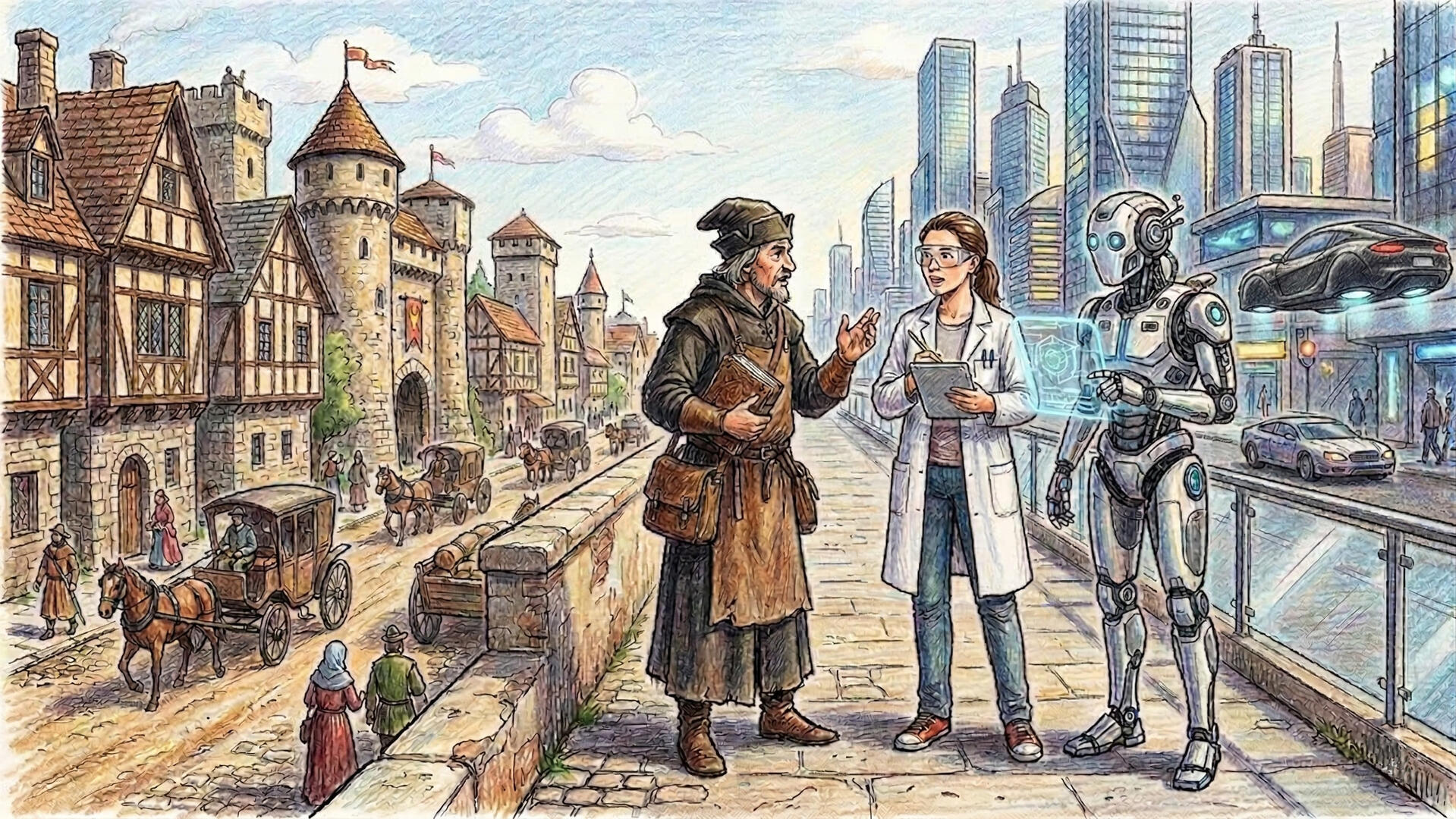
What will I be focusing on next?I am not a fan of writing sequels, but fans of the Temple of the Bird Men have been clamouring for a sequel. There is definitely enough material for a sequel, and enough moral conflict for a nice new story.There are also other stories I want to tell. Stories about alien species that we will never meet, or ones we have met, but never realised we met them.Then there's medicine - the subject I specialized in. Before poking my nose into more of other people's specialties, maybe I should focus on my own.Join the list to hear about what I am working on next. Once in a while, you might receive a short story that is not available to anyone else.Where's the link to sign up, you ask? There's none. Just drop me a mail with "List" as the header, and I will add you to my mailing list on an Excel sheet. I don't want you to have to go through a mailing list provider that will harvest your data and sell it.Oh, and if you haven't found the sinkhole in Uncontacted yet, the contest is still open...Update - May 2025:
Yes! I have found my inspiration. Have you read "Alien Oceans" by Dr Kevin Hand?If not, I fully recommend that you do. It's the best scientific examination of exobiology since Carl Sagan's "Intelligent Life In The Universe."Enlightening as it is, I do find one question unanswered in Dr Hand's book. How do we define life? If we found something that fulfills most boxes, but misses some, is it still life?That, and the upcoming Europa Clipper mission gave me the inspiration. So get ready for Europa Clipper 2 in 2040.
The Idea
It was April 2005. Not long after the 2004 Boxing Day tsunami that devastated most countries surrounding the Indian Ocean. I was sitting on a Singapore Airlines flight taxiing towards the runway at Singapore Changi airport. I can’t remember where I was heading. I used to travel a lot those days for work - so much so that my colleagues in Singapore joked that, instead of renting an apartment, I should simply check in to a hotel when I am in Singapore.I had in my hands a copy of the National Geographic. On its cover was an illustration of Homo floresiensis, the hottest paleontological discovery at the time.I don’t have that magazine anymore. A pity. I did find the cover image on Abe Books when I was looking for it while creating this page.

The articles inside also discussed tsunamis and their devastating effects, of course. That got me thinking about catastrophes - earthquakes, tsunamis.
The plane was taxiing slowly towards the runway, and there were several other aircraft waiting in queue. Thunder clouds were gathering on the horizon.Another article that caught my eye was one about the first necropolis of the Egyptian civilization, Abydos. There was a discussion on whether the bodies discovered in the tombs could have been human sacrifices. Typical, I thought, that we always attribute anything we don’t understand about ancient civilizations to religious practices.Catastrophes, ancient civilizations, interpretation of artefacts as pertaining to religion, while on a plane. The idea coalesced immediately. I took me 20 years before I had the time to turn it in to a book.Abe Books had a photo of that exact article on their website. Coincidence? Yeah, of course. How could they know I would write a book 20 years later because of this exact article?
How to destroy civilization
This being a hard science-fiction book, one of my biggest challenges was to figure out how to destroy global civilization without causing the extinction of humankind. It’s a much finer line to balance than I had imagined.For this story to work, I had to have a catastrophe that was sudden, would cause earthquakes and tsunamis, and could not be anticipated at all - not even by the ever-vigilant preppers, who shouldn’t have the time to make it to their well-stocked shelters, for my story to work.So, of course, it would have to be an impact. It should have enough kinetic energy to create a 9.6 Richter scale earthquake at Changi, strong enough to cause liquefaction of the reclaimed soil. You see, liquefaction was the only way this object could get buried quickly. Yet, at the same time, the impact needs to be distant enough for the intense heat not to destroy the object that I intended to preserve. Tough to balance.How do I deliver 10 million megatons of kinetic energy punched deep into the earth to create the kind of earthquake I needed? The obvious answer is an asteroid. Not as large as Chicxhulub impactor that wiped out the dinosaurs, but big nonetheless.
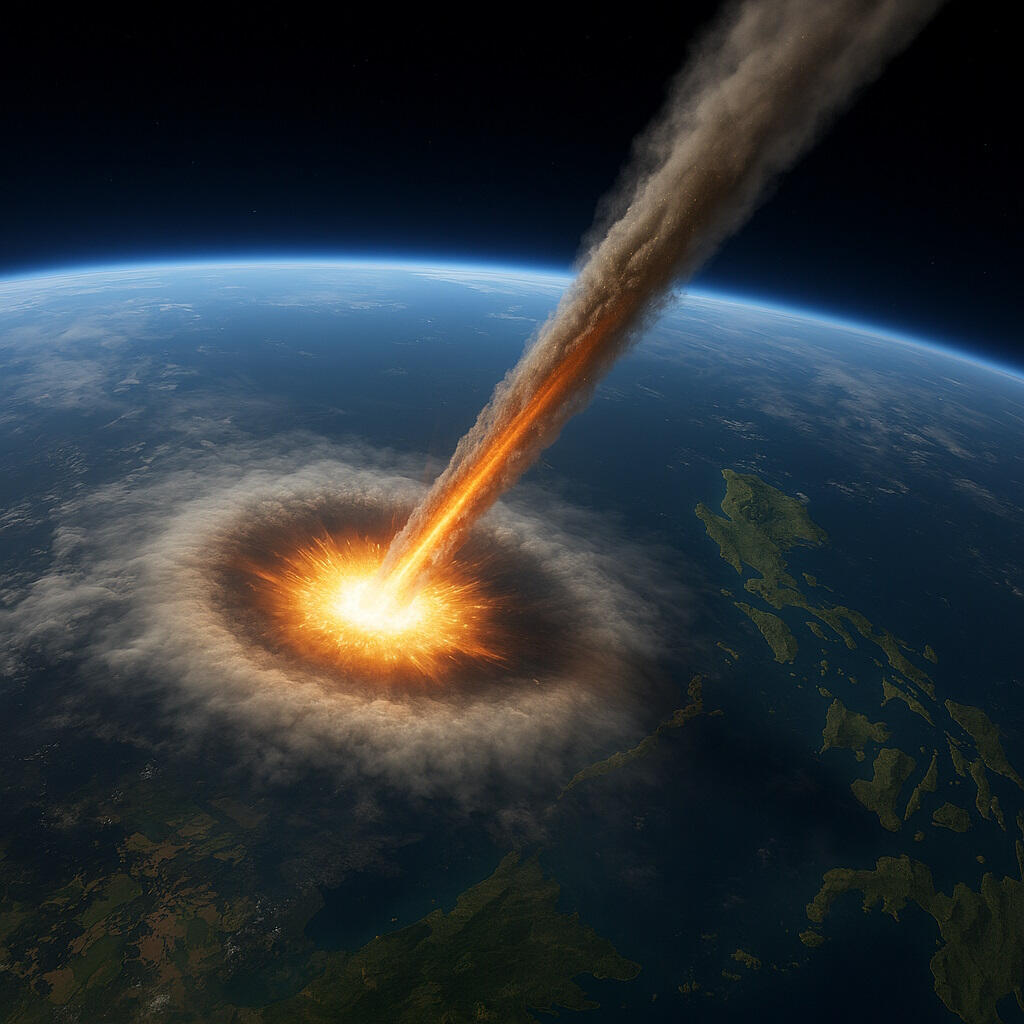
The problem is, an asteroid like that would be noticed long before it got anywhere near to impact. A nickel-iron asteroid traveling at 20km/s (the average speed of a near-earth asteroid) would need to be 3.7km in diameter (that’s 157 tennis court lengths in radius, and weighing as much as 52 trillion cats, for those strenuously avoiding the metric system). That’s humongous. We have systems in orbit that would detect it decades in advance. Enough time to send up Bruce Willis.So it needed to be small. Less than a 100 meters in diameter to avoid detection. But with the density of a Nickel-Iron asteroid, that gives a mass of about 373,000 tons. Even at the velocity that the interstellar comet 3I/ATLAS is traveling, that’s nowhere enough kinetic energy for the devastation I was planning… I mean, hoping for… I mean… Well, you know what I mean.The obvious answer is to increase the velocity. It needs to be traveling at around 5% the speed of light. That solves a lot of problems. At that velocity, none of our early warning systems would detect it. It would cross the field of view of ATLAS between frames.To avoid JWST catching it accidentally, I could have it traveling from behind the Sun from the Earth’s perspective, like the Chelyabinsk meteor that we completely missed because of the Sun’s glare. The small size combined with high velocity would ensure that the energy is delivered deep into the Earth’s crust without dissipating at the surface. It was the perfect solution. The Earth would ring like a bell, triggering earthquakes, landslides, volcanoes, and tsunamis across the globe. Yellowstone eruption will make North America uninhabitable for decades. Vesuvius and Campi Flegrei would add to the dust and sulphur dioxide already choking the upper atmosphere. The resulting volcanic winter will last for years. Long enough that only small pockets of humans close to the equator would survive.When the dust settles and the sun comes back after a few years, at the antipode, the Mato Grosso basin in Bolivia, a new mountain range will divide what remains of the Amazon. Where Luzon island used to be, there will be a circular ring of snow-capped mountains as high as the Kilimanjaro, encircling a salt-water lake a few hundred times larger than the now obliterated Taal caldera. Elsewhere, cities will lie in ruins across the globe.The main cause of the dinosaur extinction was the ejecta falling back to earth, returning the kinetic energy they carried away. That energy turned into heat, superheating the atmosphere and turning the earth into a T-rex Dutch oven.With an impactor traveling at relativistic speeds, unlike with the Chixulub event, most of the ejecta will reach escape velocity, taking the excess kinetic energy away instead of heating up the atmosphere, thus avoiding extinction level damage. The ejecta trail would be a stream of super-heated plasma pointing straight up, following the path the meteor had taken. It would look like a pillar of light brighter than the sun, stretching to the heavens.This is why the book also contains a brief backstory of the meteor that no one got to name - because hard science fiction needs to be based on what is possible within the laws of physics, not magic.
There will never be another industrial civilization on earth
Our civilization is built on an intricate web of international supply chains, commerce, and collaboration.I just wrote down my grocery list on a piece of paper (yes, because I am gen X). The paper is made from wood from Finland, at a paper mill in Sweden. The pen is assembled in China. The plastic ink reservoir tube is made in India, from petroleum extracted in Venezuela. The ink is made in Germany. The tip of the pen is precision milled in Japan, using tungsten mined in Rwanda. The spring is made in Thailand, using iron from Australia. Break down those supply chains, and I would be using a quill on parchment.“But surely we can recover from that, and rebuild technology. After all, it only took us 300 years or so to become an industrial civilization, right?”Wrong, and don’t call me Shirley. Let’s look at how we got where we are. When we started out, we had access to concentrated energy sources - coal seams that could easily be dug up. Those are gone now. Now we need to mine deep underground to get to coal deposits. Oil was oozing out of the ground in Saudi Arabia. That’s gone too. Now, we are drilling at the bottom of the ocean floor.To build an industrial civilization, we must have easily accessible, concentrated energy sources. The survivors wouldn’t have the tools to build the tools to build the tools that… you get where this is heading. They simply won’t be able to build the technology to access the energy sources that allow them to build the aforementioned technology.
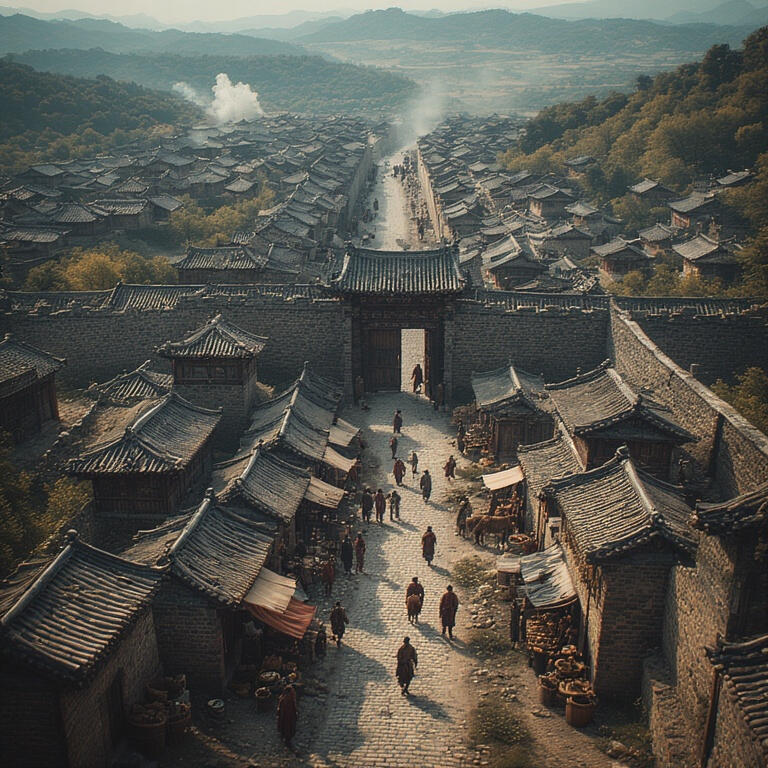
But what about the huge reserves of oil sitting in storage tanks? Assuming those tanks survived, the oil contained within them would oxidize within 6-12 months. Preppers who are hoarding gasoline know that - that’s why they use up and replace their cannisters regularly.When you (hopefully) read my book, did you read it on paper, or on an eReader?eReaders would be useless without power and internet. Books will rapidly deteriorate unless they are in an environment with 18-22 degrees Celsius and 45-60% relative humidity.By the time people recover enough to start looking for that one undamaged library with miraculously still-functioning climate control, it would be decades - because scavenging for food, and simply surviving takes priority. Even under the best of conditions, the acid in the ink and fungus in the environment eat through the books.This is one place in my book where I had to make a far-fetched assumption - that if modern glossy magazines were locked in a dry, mostly non-oxidizing atmosphere, that they would survive for a long period of time… even though that atmosphere contains Sulphur dioxide, which I need for... umm... other reasons.Modern paperbacks would probably last 40-100 years if kept in library conditions. So if you bought my book on paperback, you should probably start reading it now.In a global catastrophe wiping out civilization, where only a few million humans scattered all over the world survive, knowledge would be gone before we even realized it. We would need to start from scratch, without easily accessible energy.Any civilization coming after us is doomed to be stuck at pre-industrial levels. A shard of mirror scavenged from the ruins would fetch three sheep at the market.
Recovery after catastrophe
The plot of my book required liquefaction of the soil in south-west Singapore (sorry, my Singaporean friends). In order to achieve this, I calculated the impact occurring just off the west coast of Luzon island.This achieves the other objective of funneling a tsunami towards the Malayan peninsula that could bring enough sediment to bury the skyscrapers toppled by the earthquakes. Regional powers like China, Japan and Vietnam would be wiped out. The sediment would fill the shallow Johor straits, joining Singapore to the mainland. Most of the population of Singapore, Malaysia, and southern Thailand would be lost.In the following centuries, societies would emerge from the survivors - in the southern part of Malaysia, and northern Thailand, Cambodia and southern China. The southern part of Malaysia, the filled-in Johor straits and parts of Singapore would have rich sediment deposits that facilitate agriculture, allowing agrarian societies to flourish.The survivors in Thailand would be pressured to move south due to migration from surviving Chinese populations, migrating southwards to escape the brutal winters. Gradually the former Thai populations will be pushed into the vacant land in the Malayan peninsula.
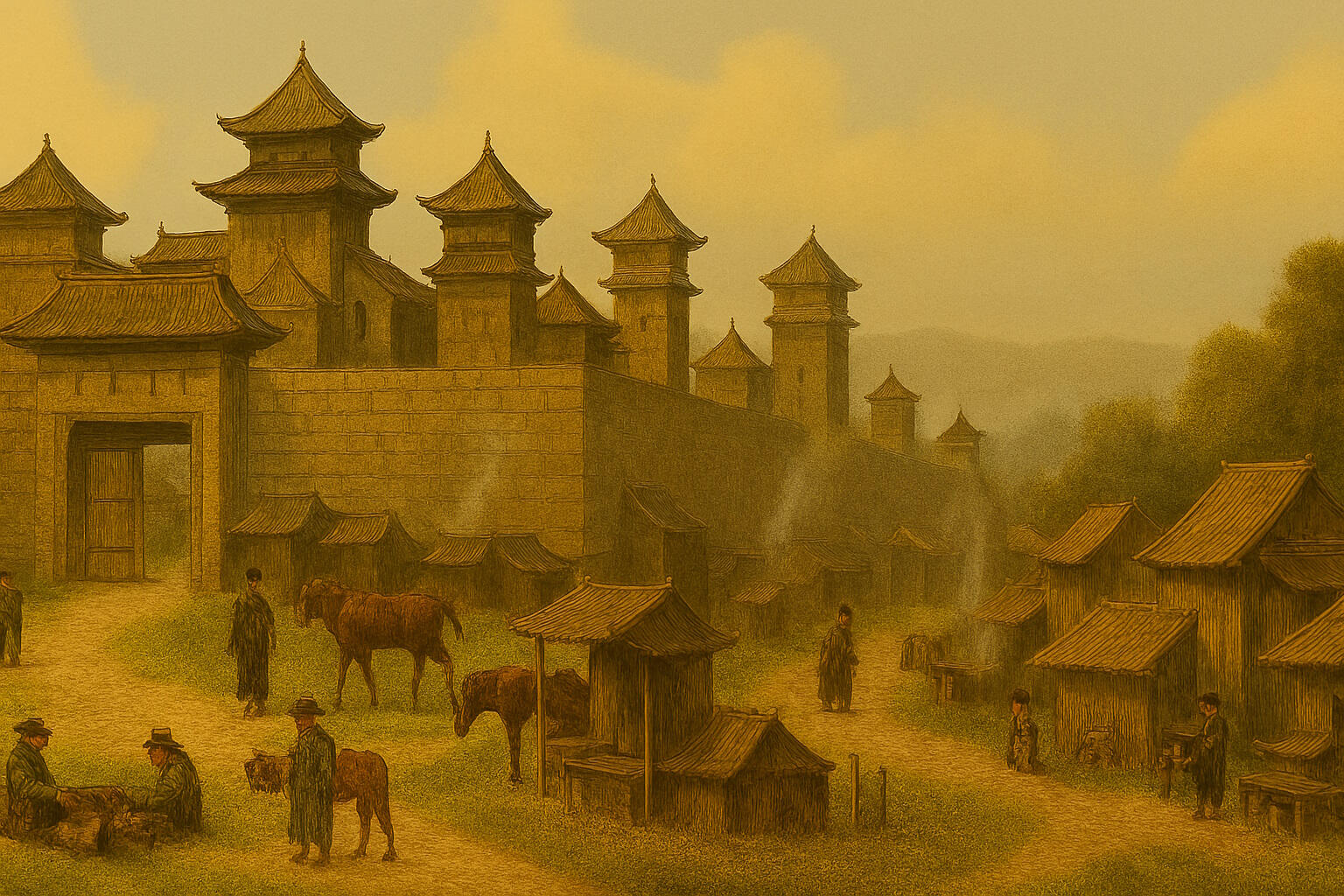
When the migrants from former Thailand meet the surviving inhabitants of the Malayan peninsula, an amalgamated culture is formed. Historically, migrating populations are likely to be more militarily advanced, due to necessity (they need to take land by force).We have seen that with the Norman conquest of England, the Mongol assimilation into local cultures, and many other examples throughout history.This means, the culture of the “northerners” will come to dominate. The names of places still retain an echo of their past names. The names of people are derived from the Thai/Sanskrit based names, mutated phonetically over centuries. I trained an AI model on NotebookLM to simulate the phonetic mutations and create realistic character names.
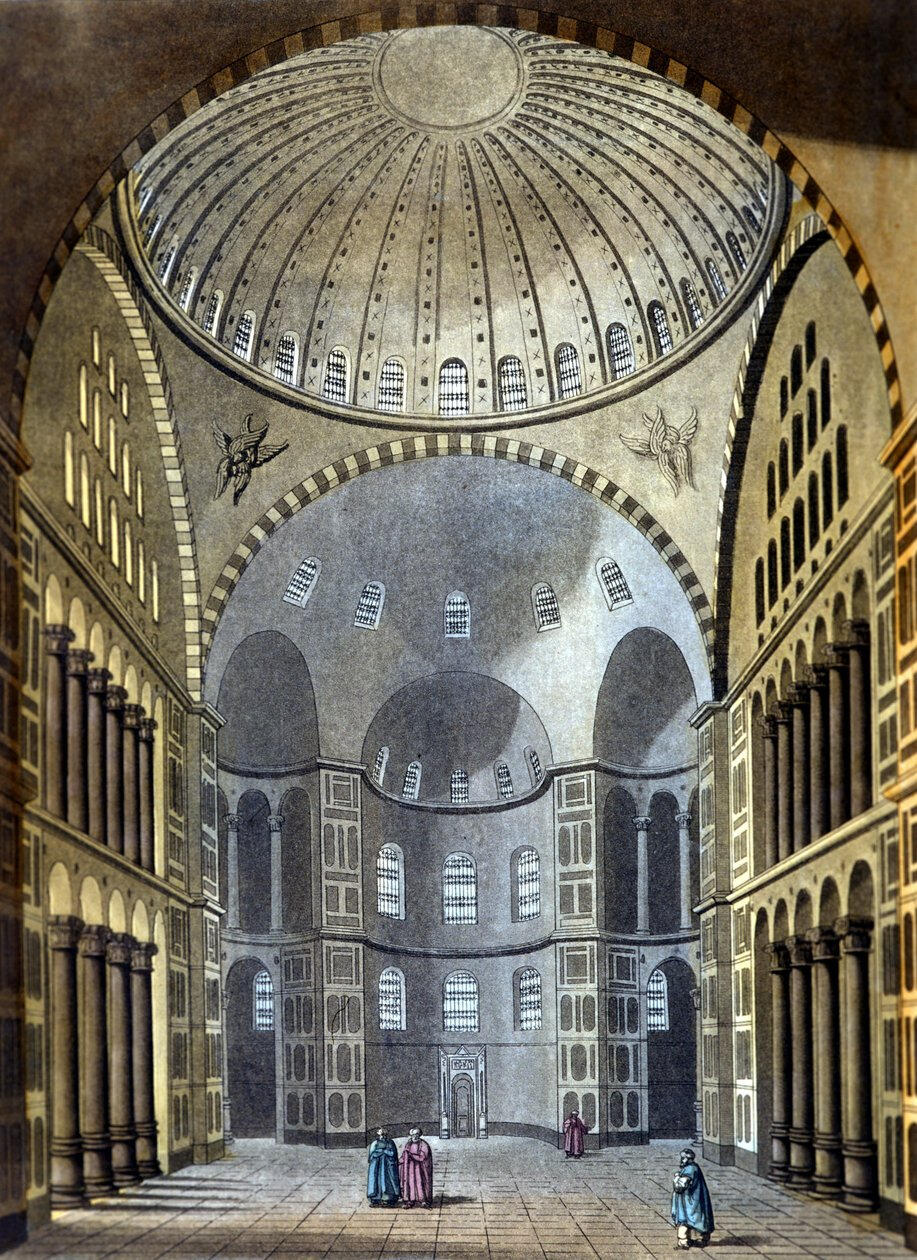
Cultural identities require a critical mass of people to maintain. Below critical mass, most cultural elements and traditions are lost, with structured religion being the first to disappear, and language surviving the longest. Language is essential for survival. Structured religion is only necessary to create order and regulate behaviour in large, complex societies, and is resource-intensive to maintain.What would replace organized religion below that threshold? Shamanism. It is the default belief system of small, dispersed, mobile groups of people - like the survivors of this cataclysm. A shaman needs no temple, no priesthood, no tithe system, no theological bureaucracy. One person with inherited or claimed spiritual authority serves a community of fifty as effectively as a community of five hundred. The knowledge is transmitted person-to-person, orally, and survives at much smaller population scales than organised religion.
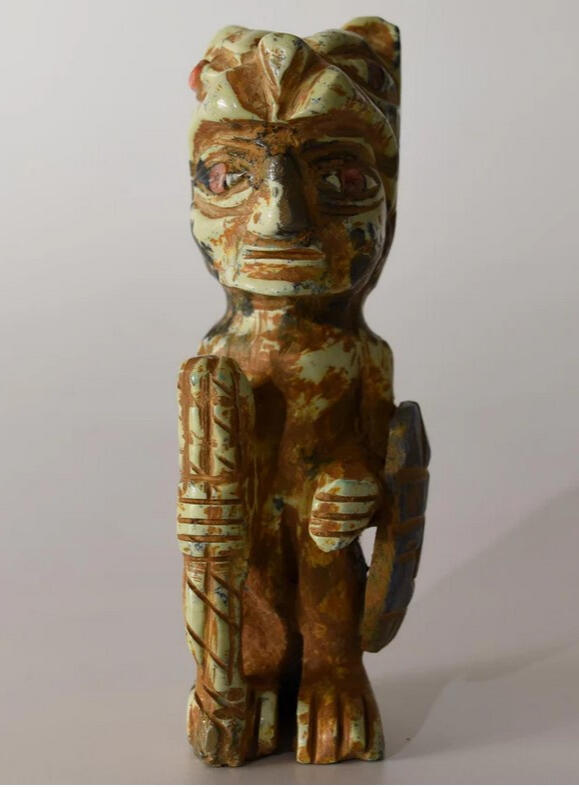
Then as communities grow, trade, and interact, they require mechanisms for regulating behaviour between strangers, between people who don't share kinship ties. Organised religion re-emerges because it solves problems shamanism cannot. It creates shared identity across large groups, legitimises political authority, and provides enforceable behavioural norms between non-kin. The Orthodoxy emerged to fulfill this need, as the population of the Malayan peninsula grew.

As the Orthodoxy grows in power and wealth, it would see shamanism as a threat to their power. Shamanism needs to be assimilated or stamped out. The Purification was an effort to destroy shamanistic beliefs and symbolism. The creation story of the Orthodoxy, designed to keep them in power for eternity, couldn't handle contradictions. Everything that challenged it had to be destroyed.
Place names
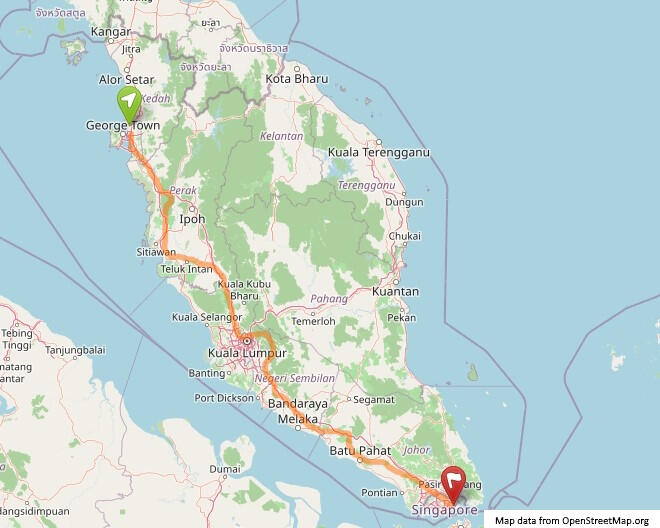
The places mentioned in the book correspond to real places existing today. Majority of the “new” place names were created using the same phonetic drift model that I built on NotebookLM to derive character names from current Thai and Malay names.Here are some of the place names, and where they correspond to today:
| New | Original |
|---|---|
| Senaang | Penang (on mainland) |
| Southern Shangee | Changi |
| Northern Shangee | Straits of Johor, Pulau Ubin and Pasir Gudang (joined to the mainland by sediment) |
| Kulampor | Kuala Lumpur (KL) |
| Peraah | Perak |
| Epoh | Ipoh |
| Forgotten Hall | Tasik Puteri Mosque north of KL |
| Riverbed Road | Highway E33 |
| Neela | Nilai |
| Sinchapoh | Singapore, of course |
| Setosha | Sentosa island |
| Tulong | Jurong |
| Alosetal | Alor Setar |
| Yala | Yala |
| Nalativa | Narathiwat |
| Klantan | Kelantan |
| Tengunu | Terengganu |
| Palan | Pahang |
| Jo’teon | George Town (Penang Island) |
| Sembang | Seremban |
| Malkka | Malacca |
| Paha-Kulang | Batu Pahat and Kluang |
Inspired by the underground astronauts
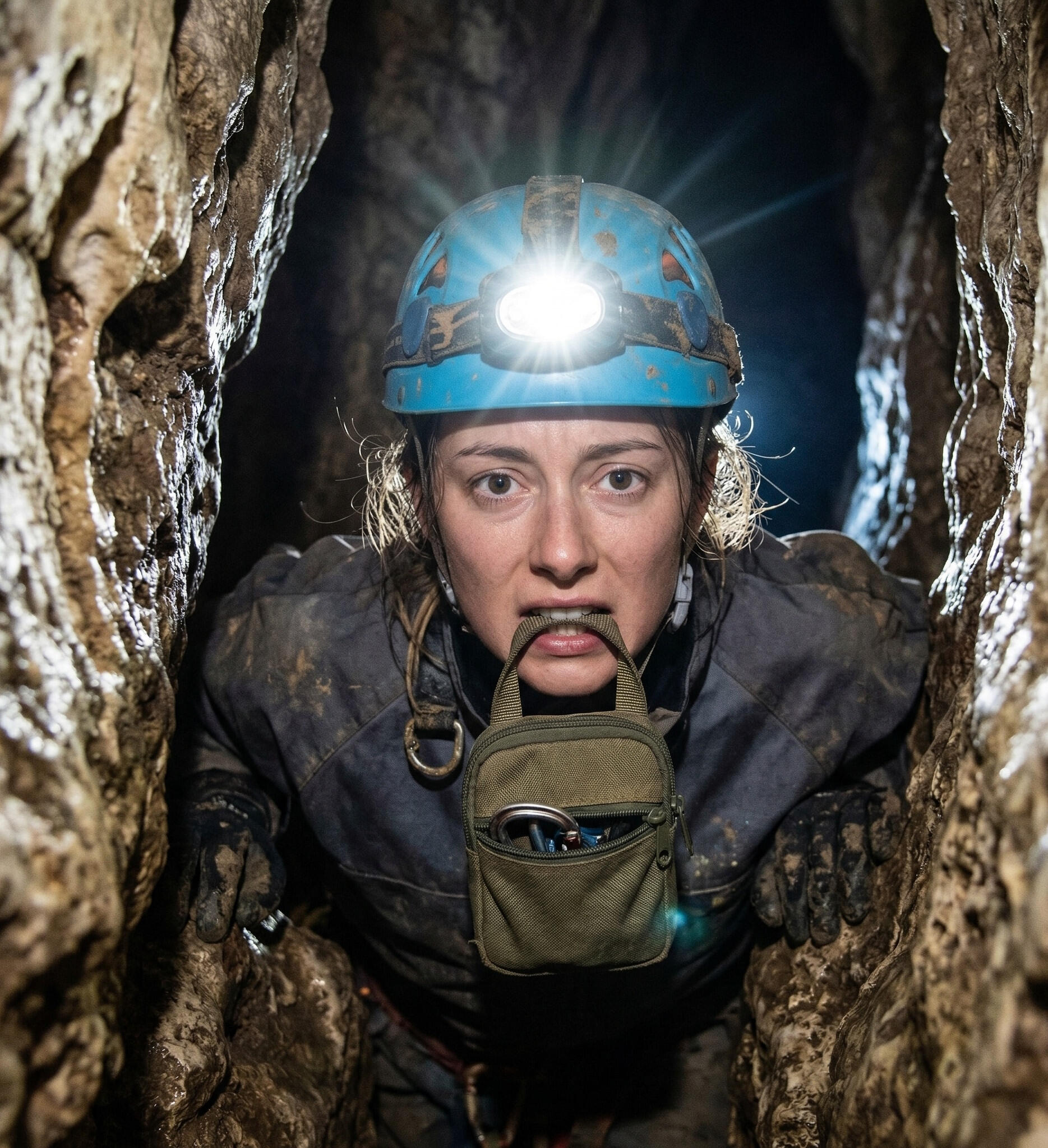
As far back as I can remember, I have been fascinated by paleontology and paleoanthropology. I grew up with the notion that the progression from Australopithecus to Homo sapiens sapiens was a neat, straight line, and that the Neanderthals were simply dumb cousins who managed to get themselves extinct. Unlike music, paleoanthropology has really progressed since the 80s.In early 2000s Homo floresiensis, or the "hobbit", was discovered, shattering assumptions about brain size and intelligence.Then came the Rising Star cave expedition led by Prof Lee Berger. It fascinated me. Partially funded by a commercial entity, National Geographic, the details of the expedition were captured in exquisite detail.Lee Berger sent paleoanthropologists deep into the Rising Star cave system, through fissures as narrow as laundry chutes, to retrieve fossils that two cave explorers had reported. All in all, more than 1,500 bone fragments were retrieved, from the Dinaledi and the Lesedi chambers.
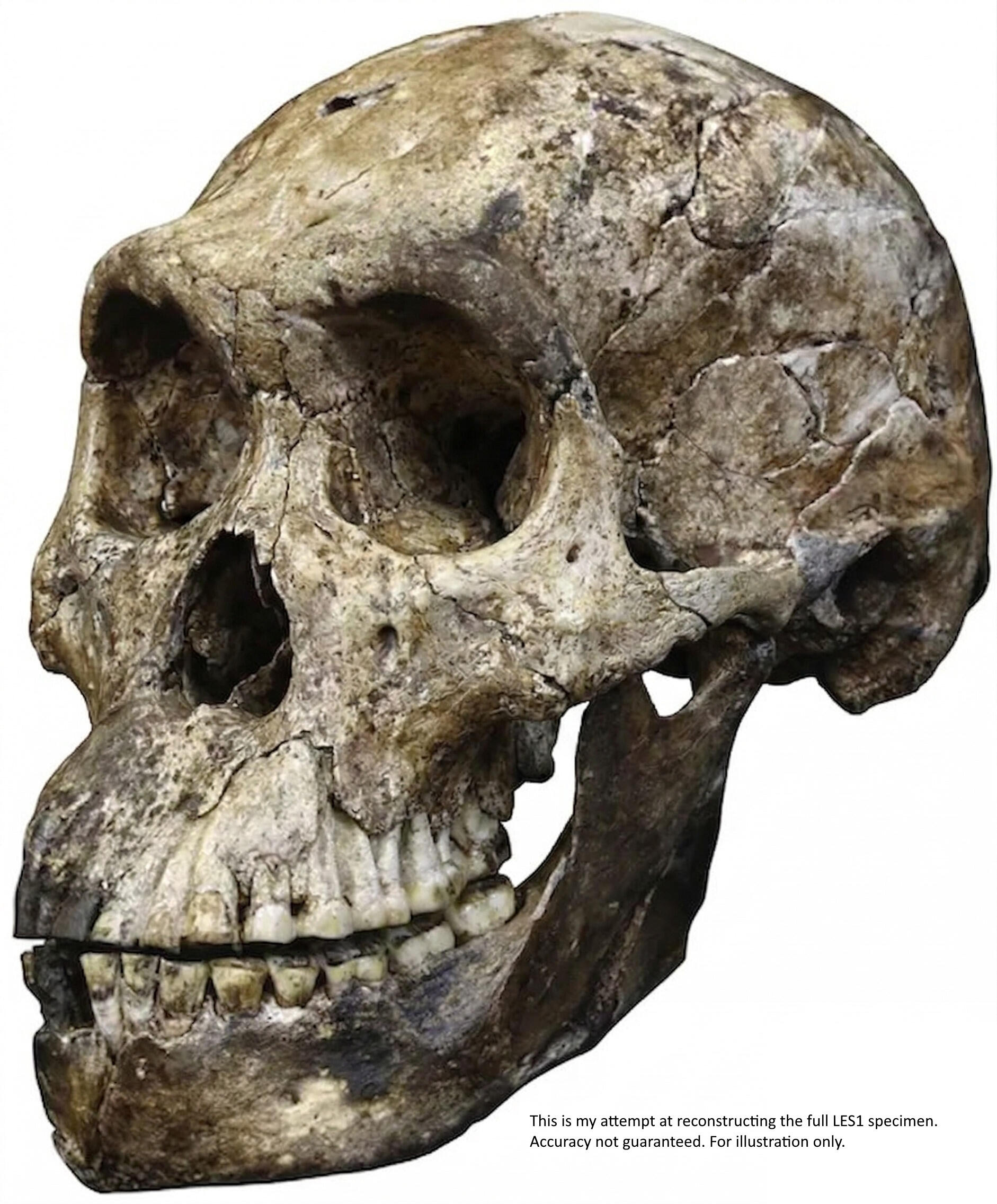
The fragments belonged to a new hominin species - Homo naledi. They lived alongside early Homo sapiens and possibly Homo heidelbergensis in the Cradle of Humankind.The bones found inside the cave were considered a deliberate burial practice. Traces of pollen were found in the calcite, indicating that maybe flowers were placed on the bodies. That would predate known human burial practices by almost a 100 thousand years.There were possible traces of fires, although that has not been conclusively proven (fight me). There were patterns that might be symbols on some areas of the cave wall, but they have not yet been conclusively attributed to Homo naledi either.
I was intrigued by a few strange features. Homo naledi face slopes forward, with reduced zygomatic arches and nasal bones. A flat face is useful when you are climbing trees... or rock faces. The feet were adapted for bipedal walking, but with long, curved toes that facilitated climbing. The shoulder joints were angled upwards - another adaptation for climbing.This has been explained away as Homo naledi being a primitive species that was still partially living in trees. A tree-climbing, primitive hominin that buried their dead in caves?I decided to imagine a different explanation and things started to fit. That's what inspired this book.Professor Berger and Dr Kathryn Ranhorn of Arizona State University's Ancient Technology Lab both appear briefly in the novel itself - a small acknowledgement of a debt that goes considerably deeper than a footnote.
The riskiest thing in Sci-Fi
Predicting the world ten years from now is the riskiest thing a science fiction writer can do. Get it wrong and you look like an idiot. Get it right and everyone assumes you got lucky. Either way, the world will have moved on before the ink is dry.The worst thing is that you are likely to be still around when you get proven wrong. Well, I am a risk taker.So consider this less a prediction and more a mood board. The political and economic currents that felt most likely to shape 2036 when I was writing, and that the novel needed as its backdrop.Some of it will have aged well. Some of it will be embarrassingly wrong. That's the deal you make when you set a novel ten years from now rather than a thousand. So here's what I was thinking.
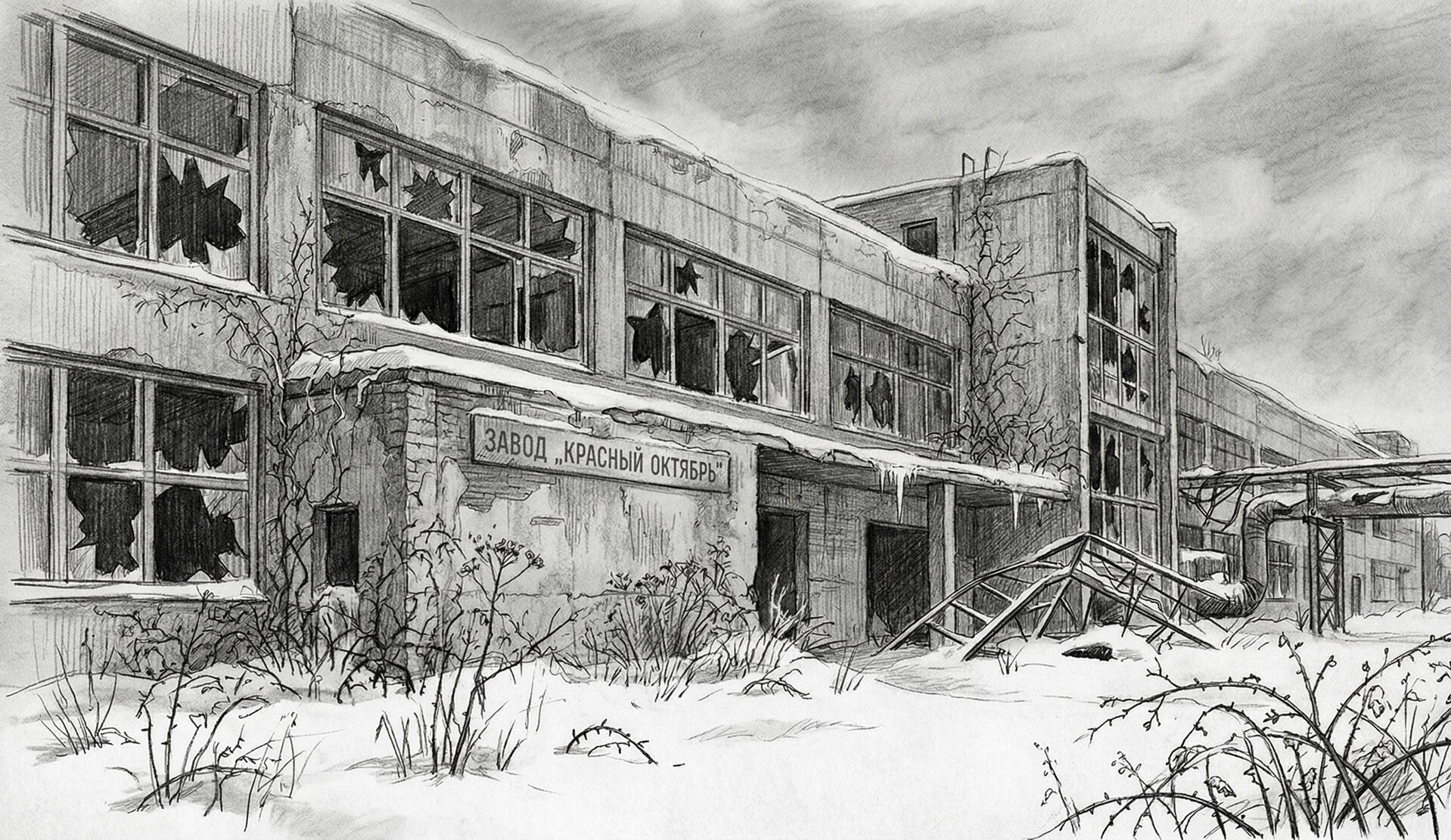
The story takes place in Siberia. When Russia loses the Ukraine war and Putin is overthrown, the economy will be in shambles. The communists worked brutally since the 1930s to erase cultural differences between the nationalities that make up the vast land, obliterated local languages, and forcefully moved entire populations around in an attempt to homogenise. It only worked partially.With a brutal dictator gone and central power diminished, a mini version of the breakup of the Soviet Union is inevitable.The Muscovians will still retain the name "Russia", but the territory will be diminished, stretching from north of Kursk to St Petersburg and eastwards only until Ryzan. Ukraine will probably claim Belgorod and Kursk as their territory.The rest will claim independence to retain the wealth from their natural resources, breaking up into a commonwealth of nuclear-armed countries. The Volga Union and Siberian Federation will do well, but the Ural Republic will probably be the economic powerhouse. The Pacific (Far-East) Confederation will probably become a proxy of China.Tatarstan, Chechnya, Bashkortostan, and Yakutia will become independent, and not be part of the commonwealth. Yakutia (Sakha Republic) will attract a lot of investment from Japan. Dagestan will become the Somalia of central Asia, with warlords funded by Georgia, Turkey, and Azerbaijan vying for control.

Russia will not be the only country to suffer from self-inflicted wounds. Across the world in 2026, fascism, authoritarianism, and robber-baron capitalism are already in the ascendant. It will come to a head when the current AI bubble collapses, wiping trillions off the global stock market.Mass layoffs will foment popular uprisings against the established order. In countries trending towards fascism, it will be the military that will decide which side wins. It won't be pretty.In the book, I remain optimistic. I am hoping that most of the western countries will be able to pull back from the brink. But as with every financial crisis that came before, it will end with even more power and money being concentrated in the hands of a select few. When the dust settles, there will be a few trillionaires and billionaires who control everything.But they won't be the ones in power now. As that old Indonesian proverb goes, "when a storm comes, it's the monkeys on the top of the tree that fall first."
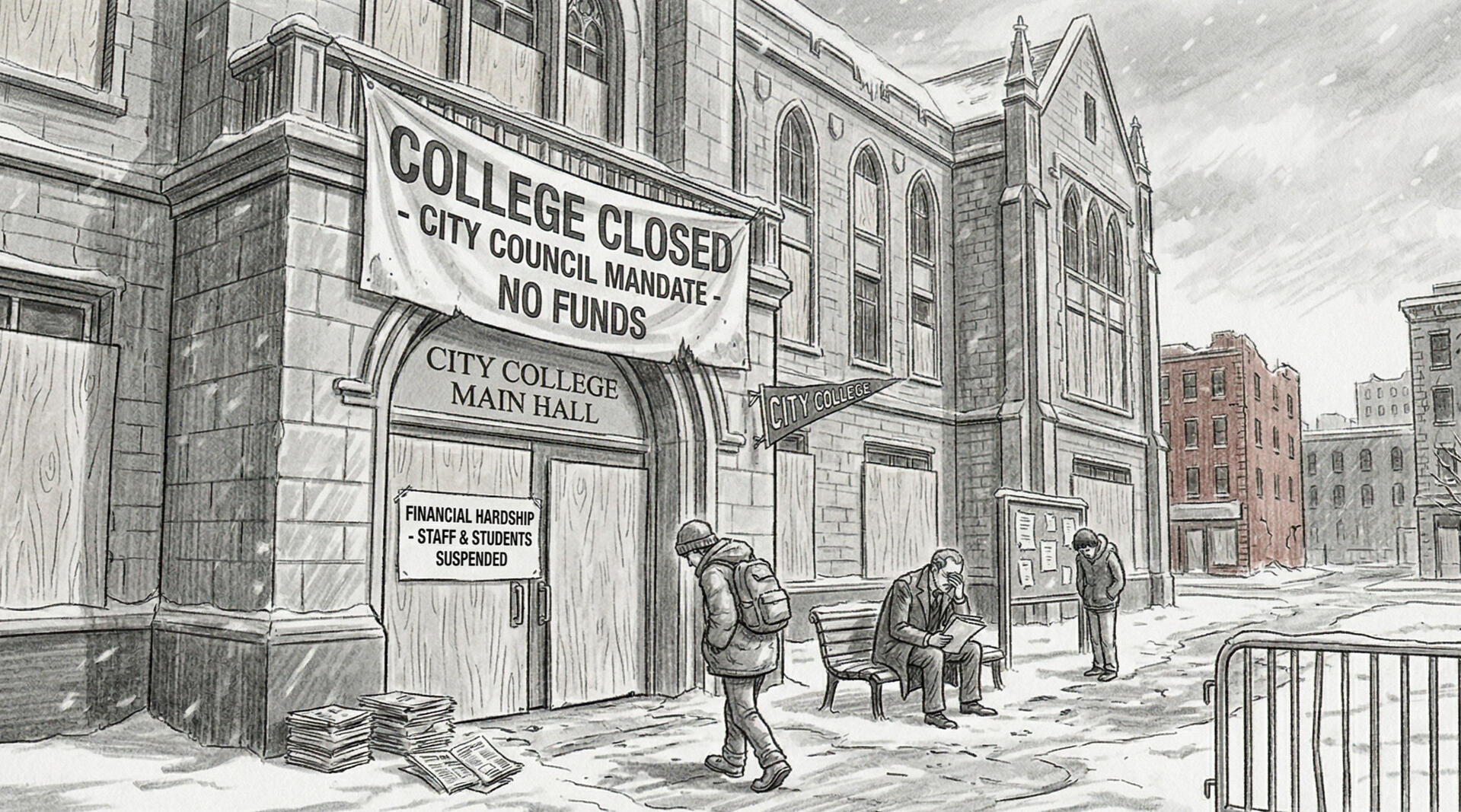
Academia will not escape unscathed. Recent history shows that when governments tighten belts, healthcare and education budgets are among the first to bleed.The funding that survives will flow toward the commercially useful disciplines, like longevity research, AI development, genetic engineering. Anything that serves power or extends the lives of those who hold it.Universities will become increasingly dependent on corporate partnerships, their research agendas quietly shaped by whoever signs the cheques.
For disciplines with no obvious commercial application, like paleoanthropology, comparative anatomy, subterranean biology... the outlook will be bleak. The people who study the deep past, the strange corners of the natural world, the questions that have no immediate answer, will find themselves marginalised. Underfunded. Occasionally desperate.Which makes them, paradoxically, exactly the kind of people a sufficiently motivated billionaire can recruit. When the price of intellectual independence has been driven low enough, half a million euros for a few weeks in Siberia for someone's pet project stops being an ethical dilemma and starts being an obvious decision. The scientists in the book are in that predicament and the AI knows it.
The technology in the book
When you read this section, please keep in mind that I wrote this in 2026. I cringe at the thought of reading this in a couple of years, let alone in 2036. Hey, people of 2036, do we have flying cars yet? Has AI replaced radiologists yet? Or are radiologists still driving to work in normal cars in traffic?
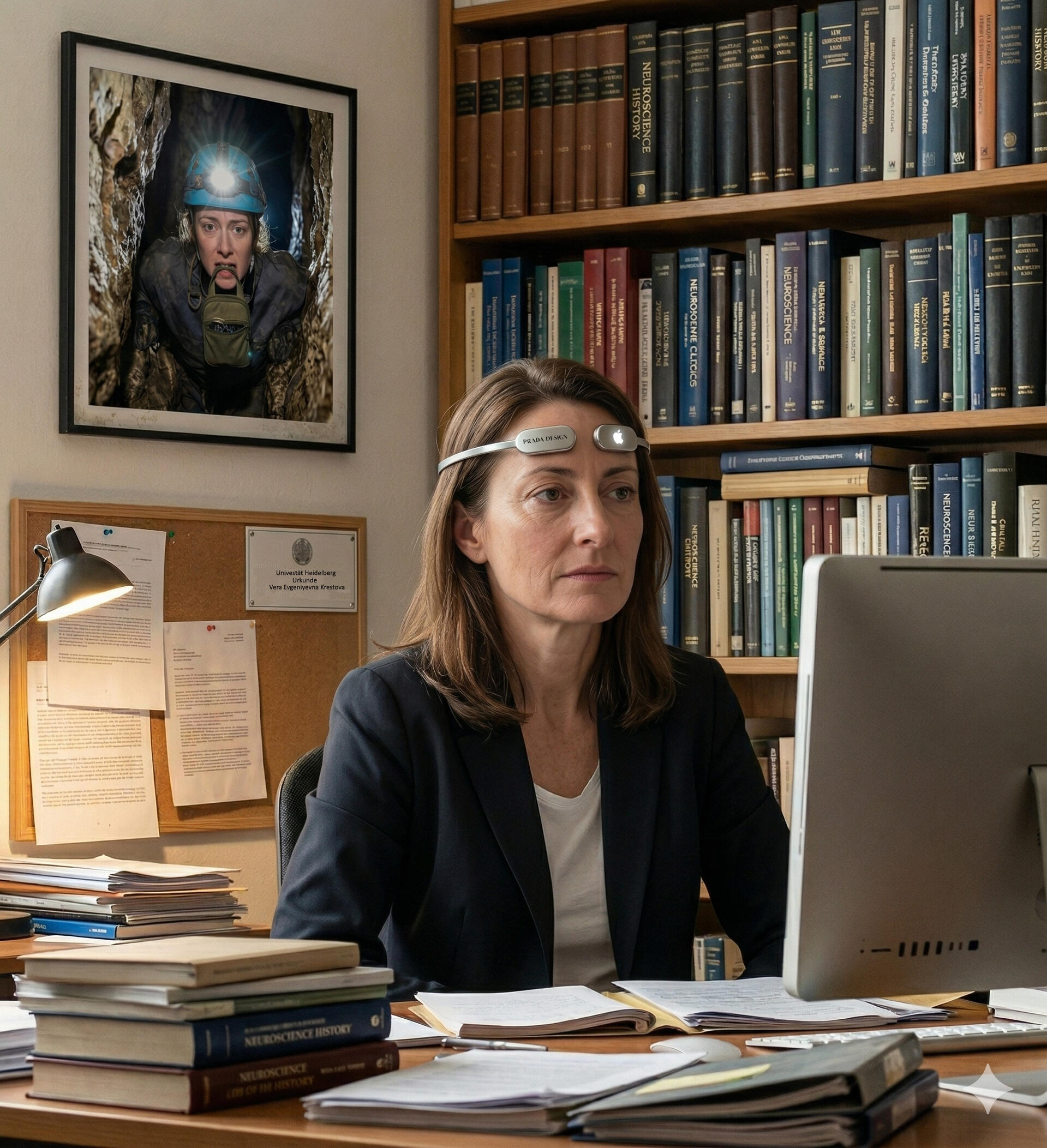
Brain computer interfaces are in their infancy at the moment, but are showing a lot of promise. Current devices are bulky, clumsy, experimental devices, but they have already moved from a user concentrating to get a single letter correct, to easily picking up words. I envision Beecees (yes, I invented the word, and you can thank me in the future) in 2036 to be sleek, light-weight devices, easy to position, and a breeze to calibrate. The market will be flooded with generic devices, and some brand names will produce their own. Even fashion brands will get in the game.Why do I believe this will take off? Well, for the same reason why Cortana on PCs never took off (figured out why yet, Microsoft? No? Read on). Using vocal commands with a device is inherently weird, and using it in a shared office space would be much worse than that loud, obnoxious guy who walks around while on a Teams call. And there's no privacy. Everyone within hearing range would know from the email you are drafting that you are about to lose the Wittford account.Beecees are inherently private. You think at your device. Of course, this being 2036, there has to be AI in everything (according to LinkedIn), so you could just think a few phrases and the AI would write for you. Yeah, of course there would be people vehemently opposed to that too... Unless future AI has stopped using em-dashes.Being able to think ideas into the device and seeing the prose in the right tone being generated, will lead to the wide adoption. We speak faster than we type, but we think faster than we speak. And, our thoughts are private. For a field scientist whose hands are usually occupied with something fragile and irreplaceable, the appeal is obvious.
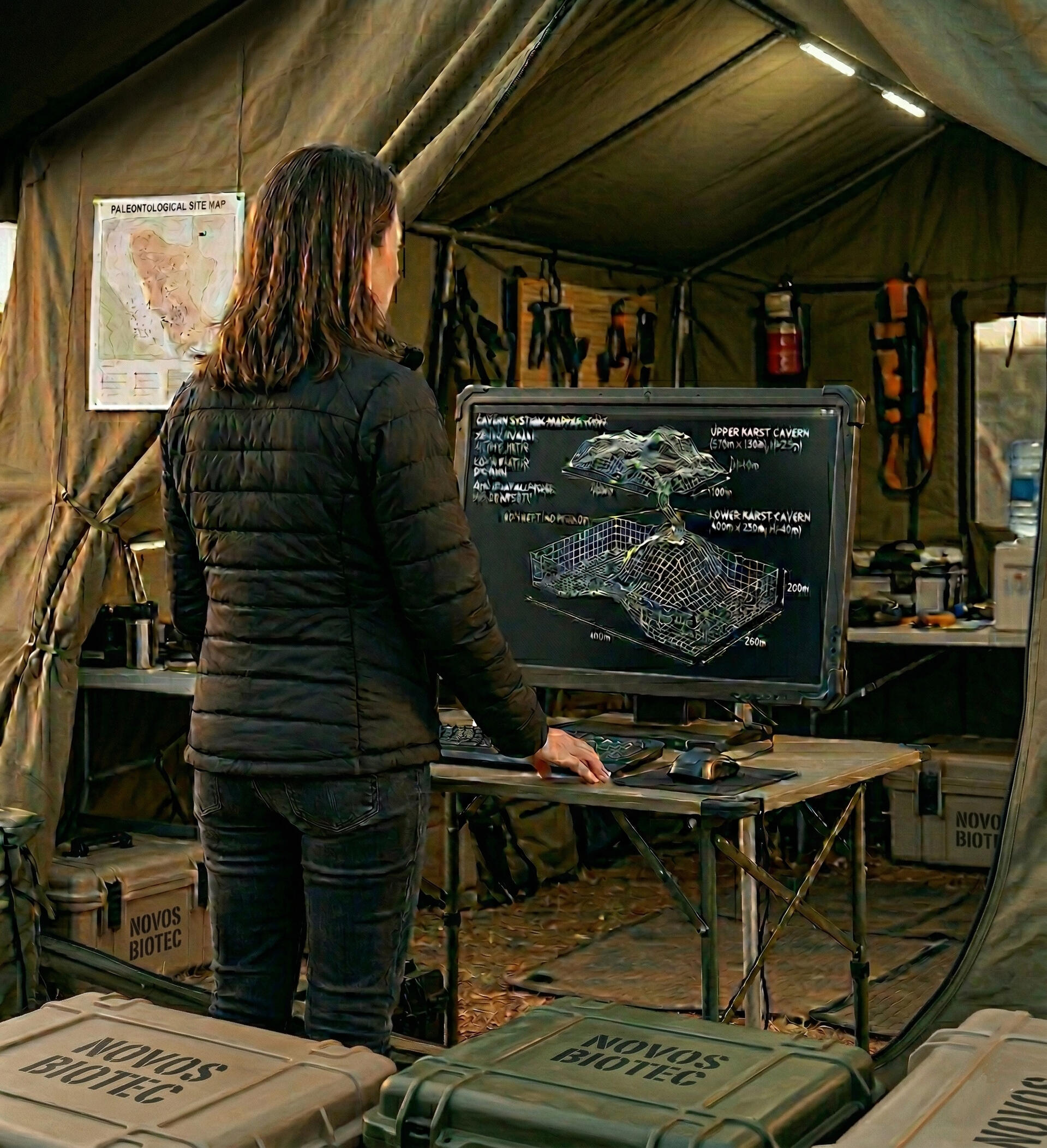
Beecee is not the only technology in the book that exists today in embryonic form, and the book imagines their refinements in 10 years' time. LIDAR equipped drones for mapping terrain, cave exploration and rescue are available today, and fans of Albert Lin on National Geographic know this. The book imagines AI-guided drones with swarm intelligence, automated line-of-sight communication maintenance, and automated mapping. Not far-fetched, I hope.AR headsets are yesterday's news. Today, they are mostly a solution desperately in search of a problem. In 10 years' time, we will probably find a way to make them practical in at least industrial, healthcare and scientific settings.Multi-spectral scanners for non-destructive dissection can be made today. There is just no financial incentive to do so. If anyone does it, it would be a company like Philips, which had always been way ahead of its time.

Overland Camping Vehicles (OCV) are real. They are niche, custom made, and often used in (well-funded) expeditions to the middle of nowhere.These are not your grandpa's RVs. These rugged, gigantic vehicles are designed to handle anything nature throws at them. Although you technically don't need a driver's license to drive them off-road, you need to be able to manage a multi-ton, multi-axle vehicle, with 6-wheel drive and four-wheel steering.Adventure tour companies do offer these for rent, but usually with a trained driver and for short time periods. But this destructive form of adventure tourism is gaining ground. Each year, more and more pristine biomes are being violated by social media influencers who have no idea what they are destroying.In 10 years' time, it is not hard to imagine the last untouched regions in the world being open to spoiled kids of billionaires in OCVs.
Here there be spoilers!
I do a lot of research for my books. Months, sometimes years worth of research, because the concepts have been buzzing at the back of my head sometimes for decades.The opinions in this book will be controversial. For example, I am expecting a strongly-worded letter from Prof John Hawks about how I casually dismiss the alleged use of fire by Homo naledi. Any day now.But disagreement is good. Questioning is good. Disagreement and questioning are what sets science apart from dogma, as illustrated in Temple of the Bird Men.Most of the things I talk about might be proven wrong. Damn it, Jim, I am a doctor, not a paleoanthropologist!That said, let's dig in, shall we?
WARNING: If you haven't read the book yet, this might spoil the surprises.
The science behind the story
Cave biome
Karst cavern systems are carved by water flowing through limestone bedrock, slowly dissolving it due to the acidity of the water. The interior of such cavern systems look spectacular, with stalactites, stalagmites and flowstones and the remnants of the mighty underground rivers that carved them still running through them.
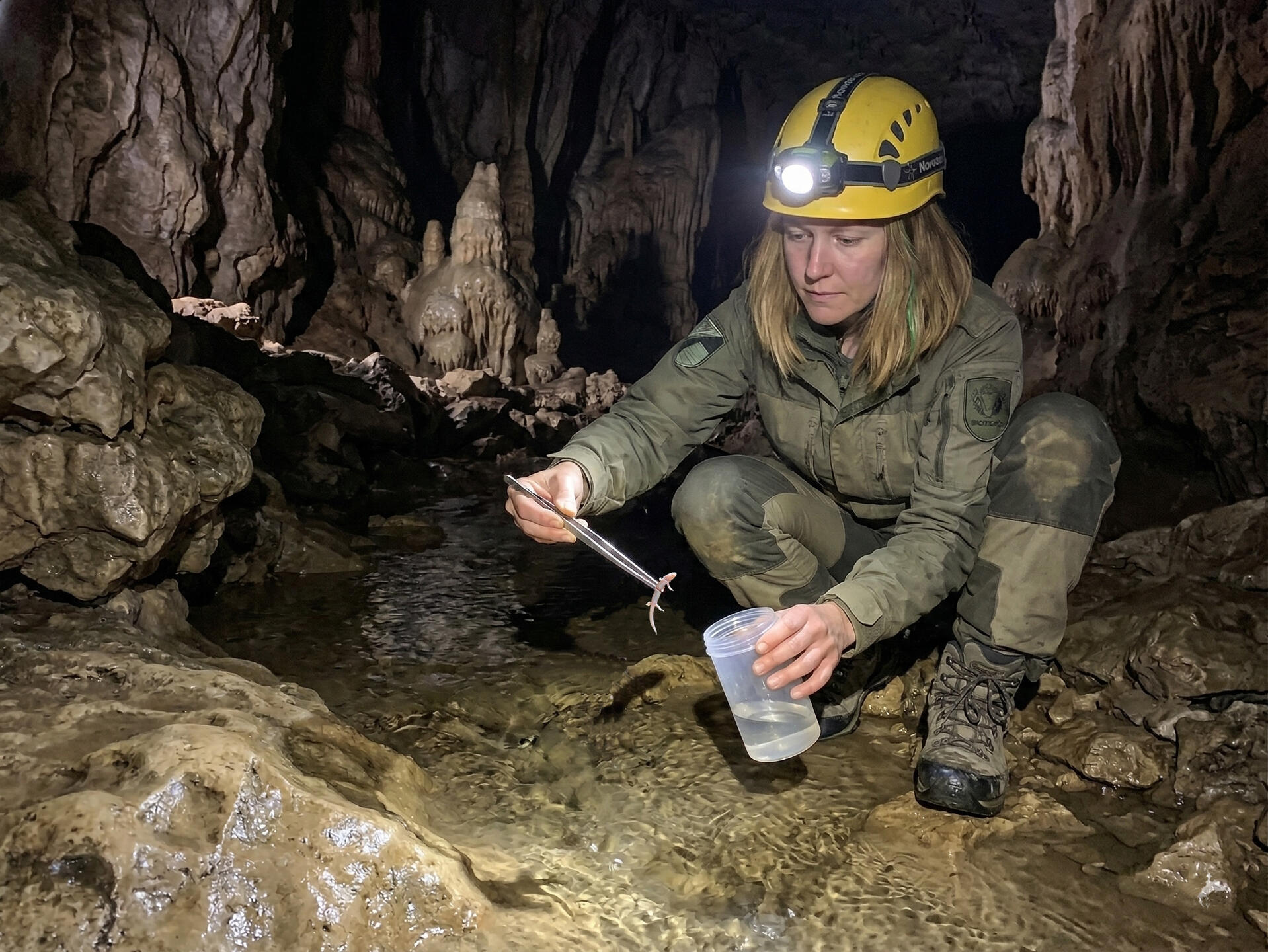
Linnea Bergström is a cave biologist, and she says from the beginning that a completely closed off cave system is unlikely to support any kind of life other than bacteria and a few insects. She's absolutely right, because sunlight is the primary source of energy driving ecosystems on earth.However, I needed to have a sealed cavern system for the story to work, and it needed to support more complex life. So I had to devise other ways to deliver energy into the cavern.If part of a surface river flows into and through an underground cavern, it could carry with it dead leaves and twigs. This is not an uncommon situation. In fact, the mighty Danube river that flows from the Black Forest to the Black Sea does the same thing a dozen kilometers after its origin in Donaueschingen in Germany. Between Immendingen and Fridingen, a significant portion of the river disappears underground into an unexplored karst cavern system. In summer months, sometimes the river completely disappears underground in this stretch, and some of the water even ends up in the Rhine river, flowing to the North Sea.The problem is, with fast flowing water, that nutritious leaf detritus would be swept out of the cavern before it could be consumed by life forms. This is why the artificial terraces that break up the flow are important.

Just having an energy source isn't enough. I also need it to be broken down into easily ingestible sugars. Cellulose is notoriously hard to digest. All mammals that consume vegetable matter only manage to digest just a part of it, even with rumination and fermentation. Even then it's just a small part the total energy content that gets absorbed. That's why elephants and cows need to consume a large amount of food to cover their energy needs, and they are very inefficient at digesting what they eat.There are creatures that do it way more efficiently than mammals. Termites are one example, but not very practical for a karst cave.Pill bugs, or woodlouse, breakdown leaf detritus using their hard mandibles, and it gets efficiently digested in their hind gut crypts where they host Bacillaceae bacteria to break it down into sugars. Pill bugs are hard to digest themselves, because of their hard chitin armour. They would need to be chewed thoroughly or ground down well, and if you want to extract every bit of nutrition, they need to be fermented in the gut. Good thing I haven't been in a situation where I had to subsist on pill bugs. Yet.
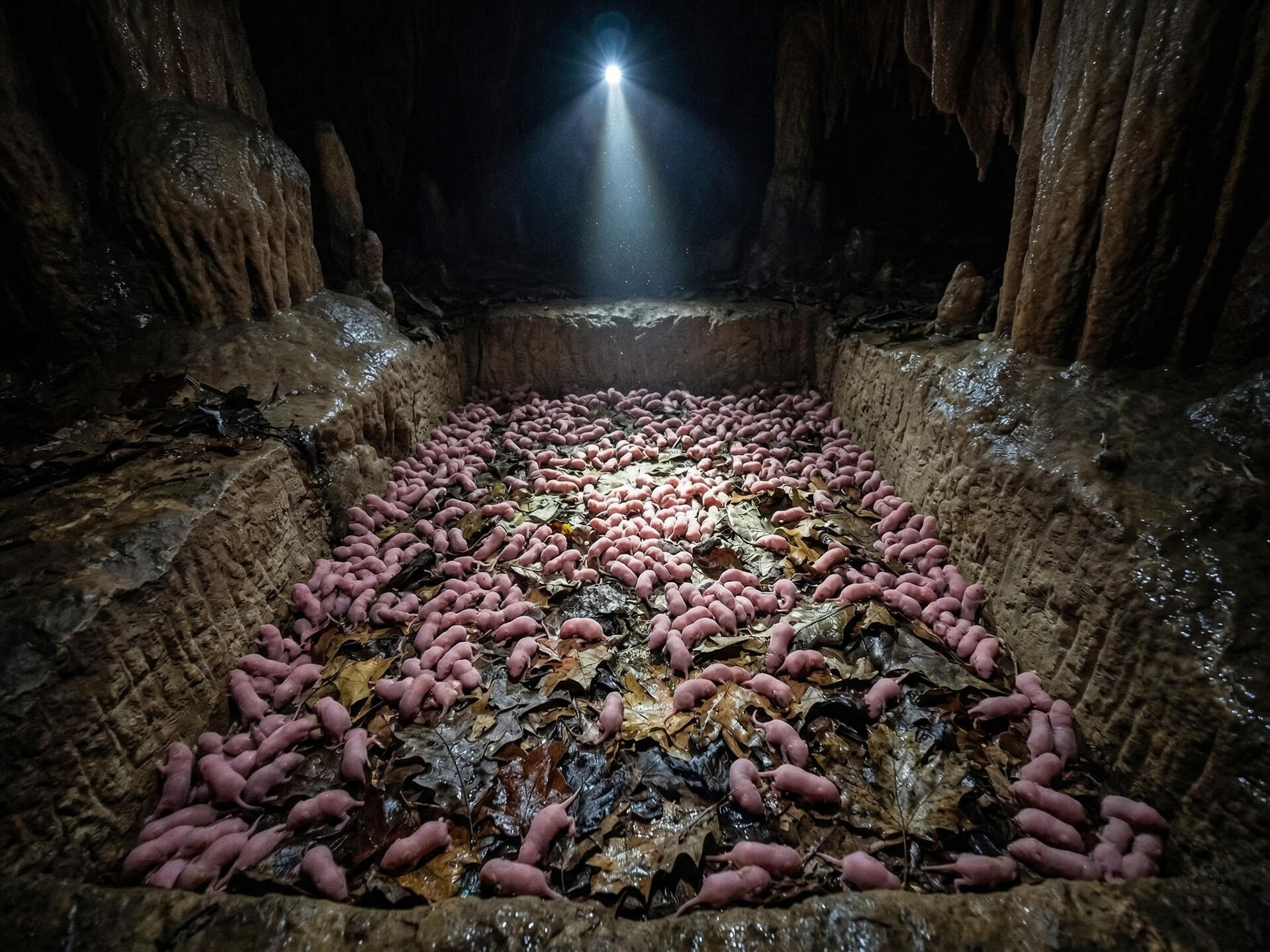
There are mammals that are way more efficient at digesting cellulose than cows. Rodents are extremely good at extracting nutrition from leaves, bark and rotting wood.In the Altai taiga biome, voles are one of the main detritivores, forming the base of a food chain that feed even the majestic golden eagles and the famed Altai falcons that nest in the Sayan mountains.This gave me an idea. Farmed voles could provide an alternate way to convert leaf detritus into easily digestible proteins. They breed fast, and as long as you feed them, form a reliable supply of meat.Voles, farmed in the darkness over millennia in a warm, damp pit inside a cave would gradually lose their fur and eyes, and end up looking like new-born mice. Pill bugs would eat their droppings and any leaf remains the voles leave behind.
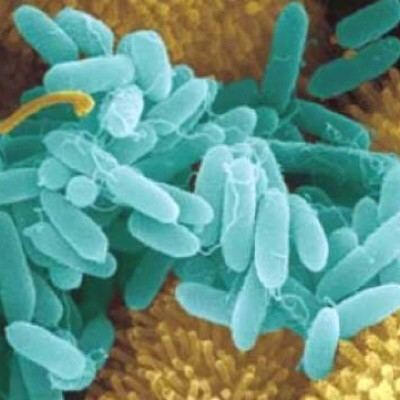
Remember when I said that sunlight is the primary source of energy for life on earth? Well, it isn't the only one.Limestone karsts are rich in sulphur. Sulphur oxidizing bacteria often form biofilms and microbial mats on wet limestone walls. Eating those would be highly toxic, not to mention unpleasant. Yet, it's a significant source of independent energy. In a closed-off ecosystem where each calorie matters, this is not something to be scoffed at.Again, pill bugs were an elegant solution. They have the mouth parts to scrape biofilms off the rock. With a few tiny adjustments to their immune system, hosting Thiobacillus in the hind gut crypts would be as easy as hosting the cellulose digesting Bacillaceae.This is where my imagination ran wild. A cave-adapted version of Porcellio pill bugs, that could gorge on leaf detritus and digest them using Bacillaceae when times are good. During lean times, they could scrape off some Thiobacillus, let them colonise the hind gut crypts, and ingest sulphur rich dust that Thiobacillus could make sugars from.A larger creature ingesting pill bugs would be tapping indirectly into that second source of energy.This is not fantasy. In 1986, workers building a power plant in the town of Mangalia, Romania, accidentally discovered a cave that had been completely sealed off for 5 million years. The Movile cave is much smaller than the cavern system in my book, and there were no nutrients nor oxygen coming in. Yet, life evolved to survive there. Sulphur-reducing bacteria forms the base of the ecosystem, and support 48 (known up to now) species of invertebrates. You can read about the discovery on this BBC site.So, in "my" cavern, with nutrients flowing in, and the river bringing in oxygen and removing CO2, supporting more complex creatures becomes plausible.And one other thing. I cheated a bit. Even with regular detritus input, farmed voles and sulphur-eating pill bugs, I still couldn't balance the energy budget1, because these darned mammals burn a lot of calories keeping their body temperature up. So my cavern is geothermally heated by a deep plume. Arguably rare, but not impossible in the Altai foothills. That has a huge impact on biology of the relict hominins. Yeah, click that button.1Let me know if you would like me to post the calculations here
Biology of relict hominins
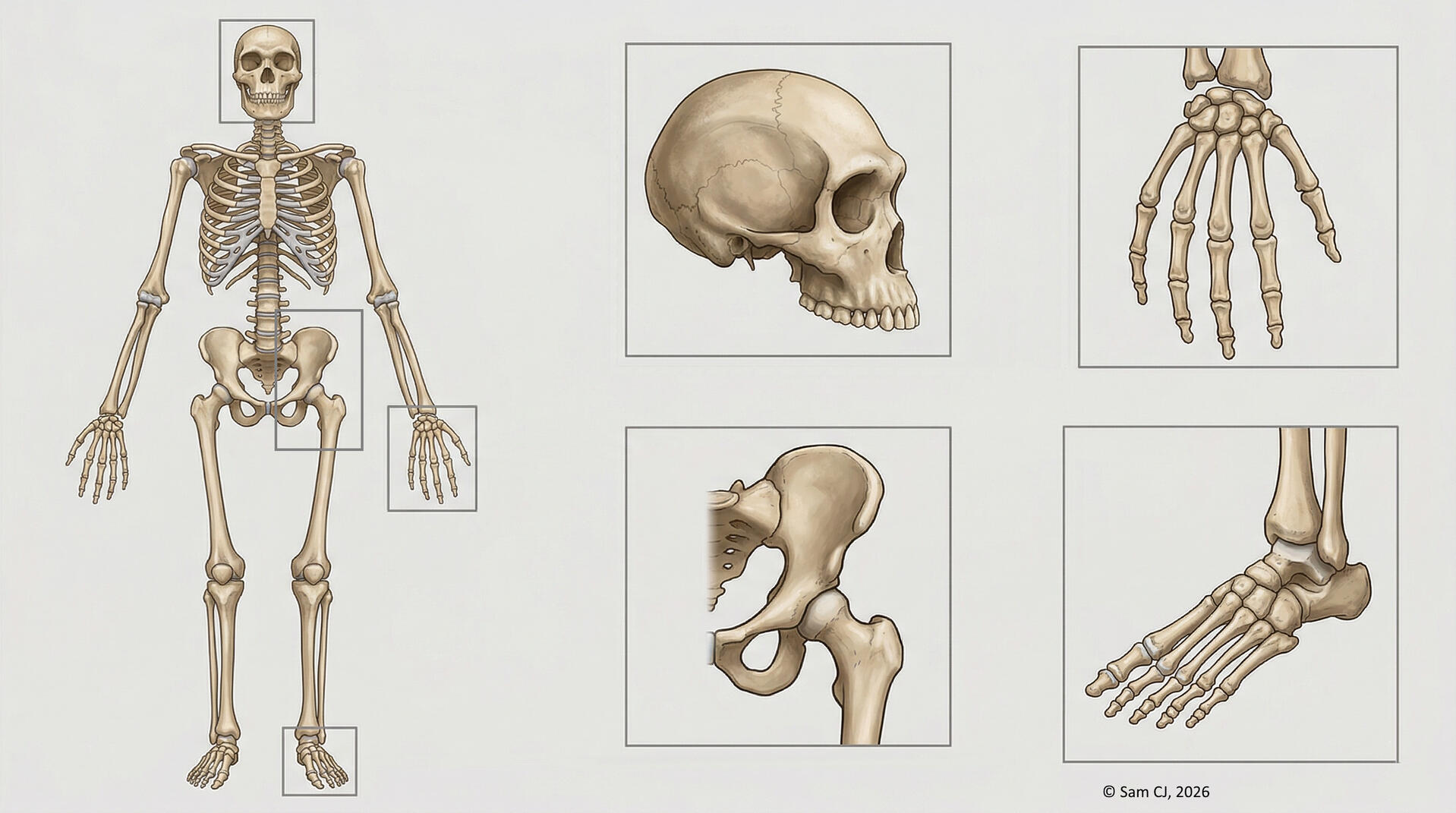
As I mentioned before, I have my doubts about the Homo naledi being a tree-dwelling hominin narrative. It's shoulder blades were rotated so that the shoulder joint points more upwards than it does in humans. This means, when it is standing up straight, the arms will be at an angle to the torso, rather than parallel to it. This is seen in apes that do spend time in trees.The face is flattened, which is also an adaptation for climbing without repeatedly bumping your nose into whatever you are climbing. Chimpanzees have a similar flattened face, a single similarity which some creationists are using to claim that Naledi fossils are misidentified chimpanzee fossils because... well, they are special like that.The hip joint and the ankle joint support upright walking (not chimpanzee knuckle-dragging). In fact, Homo naledi has the skeleton of a creature that walked a lot. Tree dwellers usually don't walk a lot.That got me thinking. What if Homo naledi were trogloxenes - creatures that use caves for shelter? They could be sheltering in caves and going out to find food. Their legs hint that they could walk long distances. Maybe they even had migration patterns. Their small size suggests a scavenger niche. They may have even scavenged off Homo sapiens kills.
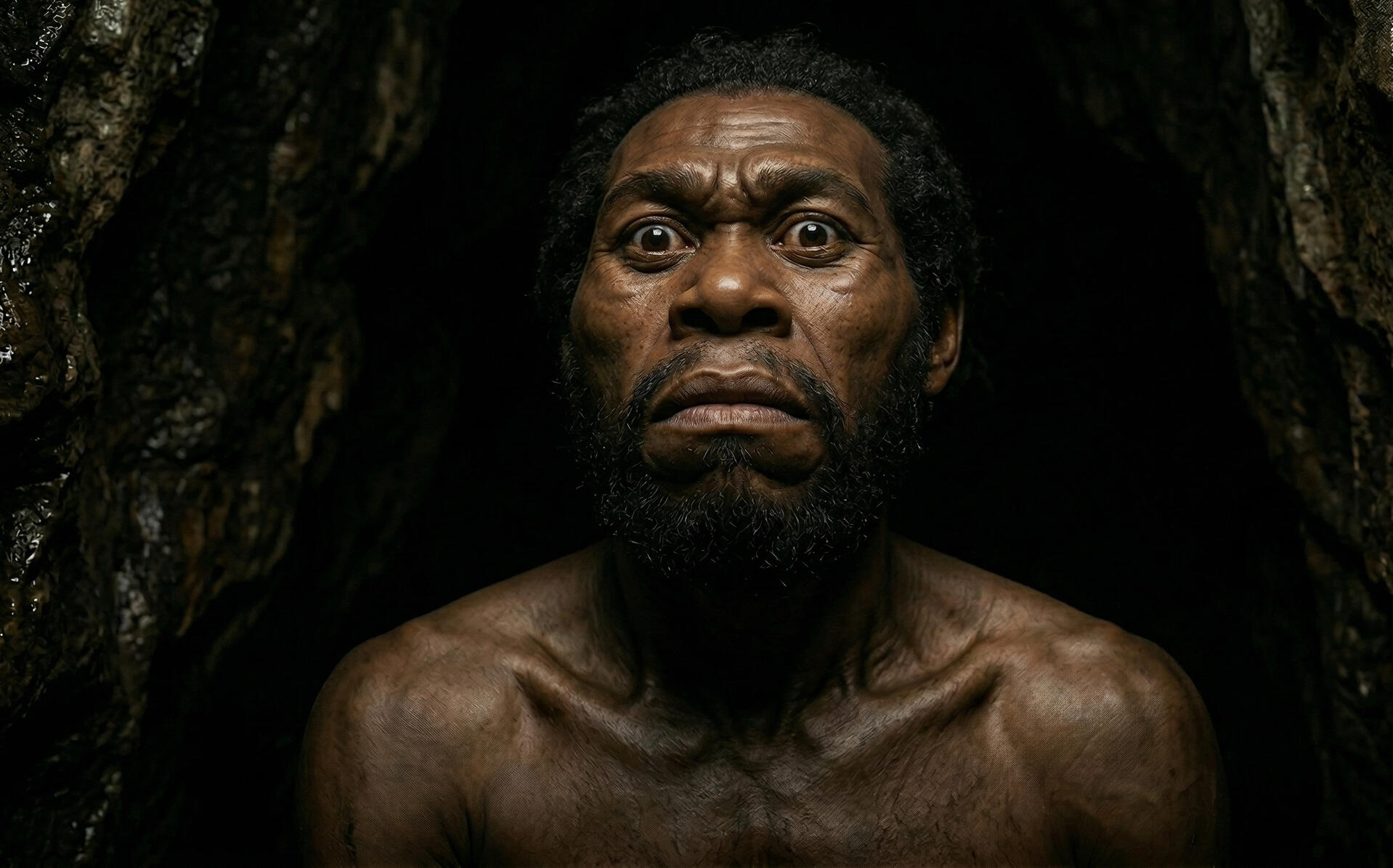
The rest was a thought experiment. What if Homo naledi transitioned from a trogloxene (creatures using caves for shelter) to a troglophile (creatures preferably spending most of their lives in caves) and finally to a troglobite (a creature that completes their entire life cycle within a cave system with no surface contact)?True mammalian troglobites are essentially unknown in nature. Cave-adapted mammals like certain bat populations show some troglobitic traits, but no mammal species has been documented completing its full life cycle in obligate cave conditions.The farmed voles in the novel, gradually losing fur and eyes over millennia of selective pressure in total darkness, represent a plausible extrapolation of the regressive evolution seen in cave fish, cave salamanders, and cave invertebrates, but applied to a mammal for the first time.So, how would a troglobitic hominin look? Especially one living in a high humidity cavern with a constant temperature of 30 degrees Celsius (86 degrees Fahrenheit).But before we dig into that, let's address the question of how these relict hominins got to that nice, warm cave in Altai foothills in the first place.
The long walk
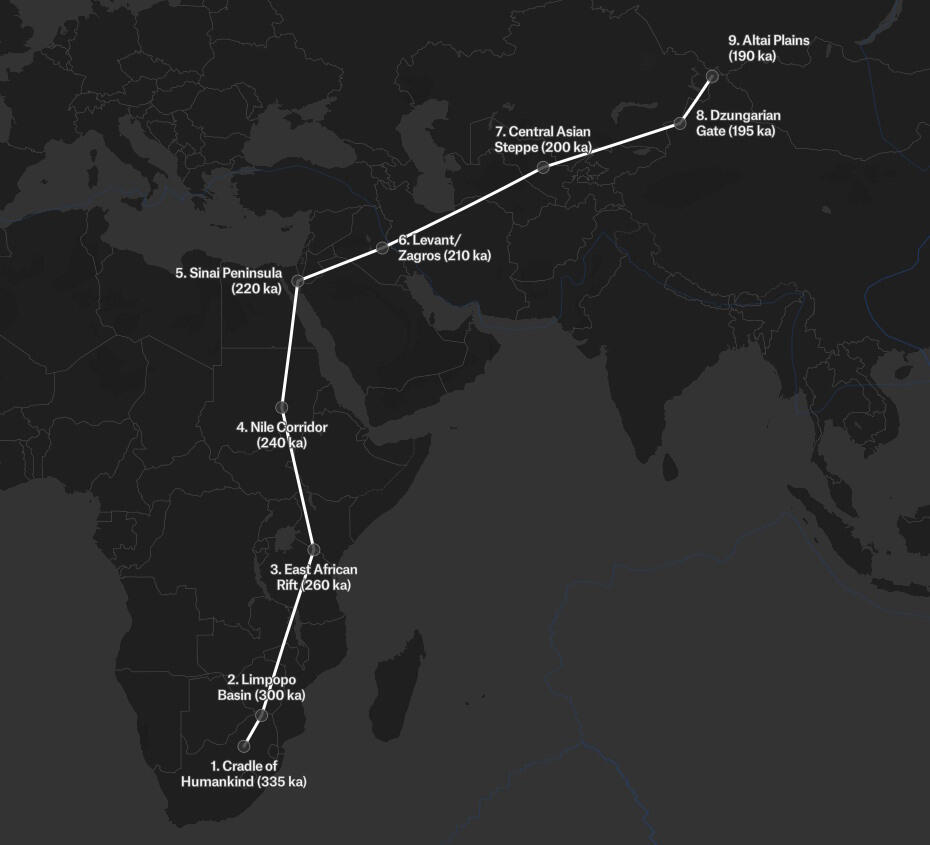
Homo naledi lived in the Cradle of Humankind in South Africa around 335,000 years ago. The Altai foothills of Siberia are roughly 12,000 kilometres away. The obvious question is: how did they get there?The same way everything gets anywhere. One generation at a time, following the food.Hominins were not static. Homo erectus walked out of Africa and reached Southeast Asia more than a million years ago. Denisovans, identified from a single finger bone in a cave in the Altai mountains, were in Siberia at least 50,000 years ago. The driving mechanism in every case was the same: climate. When conditions changed, the animals moved, and the hominins that ate them moved too.Here is how I modelled the migration, waypoint by waypoint:
1. Cradle of Humankind (335ka)
The starting point. Rising Star cave, South Africa. Homo naledi is sheltering in tight cave passages too narrow for larger predators. They are trogloxenes - using caves for protection but foraging on the surface. They may even have been nocturnal. Their long-distance walking adaptations suggest annual migration patterns already exist.
2. Limpopo Basin (300ka)
Around 300,000 years ago, a major shift in African hydroclimate brings drying conditions to southern Africa. The megafauna that naledi scavenges from moves north along the Limpopo and Shashe river corridors. Naledi follows. The limestone karst belts of Zimbabwe and Mozambique provide shelter along the route - tight caves, inaccessible to larger competitors.
3. East African Rift (260ka)
A humid phase around 260,000 years ago creates grasslands and wetlands across Tanzania and Kenya. The megafauna expands into this productive landscape and naledi follows the predators that follow the herds. The rift valley is rich in lava tubes and volcanic cave systems - ideal shelter for a small, cave-preferring hominin. Here, almost certainly, they coexist with early Homo sapiens and possibly Homo heidelbergensis. Naledi stays in the margins. Nocturnal foraging, tight cave shelters, scavenging from kills made by larger competitors. Their strategy is avoidance rather than confrontation.
4. Nile Corridor (240ka)
Marine Isotope Stage 7 begins around 240,000 years ago, bringing a prolonged period of relative warmth and humidity to northeastern Africa. The Nile corridor becomes a green highway. Vegetation follows the river north. The megafauna follows the vegetation. Naledi follows the megafauna. The Ethiopian highlands, rich in caves and rock shelters, provide staging posts along the route.
5. Sinai Peninsula (220ka)
During MIS 7 the Sinai is passable. Archaeological evidence places other hominins in Israel as early as 194,000 years ago. The corridor was in use during this general period. Naledi's small body size and low caloric requirements would allow survival in conditions where larger hominins struggled. They hug the highland karst rather than the lowland routes occupied by other hominin species.
6. Levant and Zagros foothills (210ka)
The Zagros Mountains of modern Iran and Iraq are extensively karstic, riddled with cave systems that remain incompletely surveyed today. This is probably where the ancestors of the Altai population first encountered cold winters. The Zagros highlands have significant seasonal temperature variation even today. A creature that shelters in caves and has been doing so for 125,000 years is better equipped for this than most. The caves are the solution to the cold, just as they have always been.
7. Central Asian Steppe (200ka)
It's a narrow window. Late MIS 7 is beginning to deteriorate by 200,000 years ago, but a humid spell across northern Iran and Turkmenistan briefly creates grassland corridors where previously there was arid scrub. The window is closing fast. A small population moving quickly enough through a viable corridor, following the last of the steppe megafauna, could make this crossing.
8. Dzungarian Gate (195ka)
The natural topographic corridor between Central Asia and the Altai-Mongolia region, used by species throughout the Pleistocene as the primary passage between the two regions. The timing is tight. MIS 6, the most severe glaciation of the last half million years, is approaching. The surface world is becoming hostile. But small, cave-sheltering hominins with low caloric needs can survive conditions that would stop larger species entirely.
9. Altai Plains (190ka)
MIS 7 ends at approximately 190,000 years ago. The penultimate glaciation begins. This is where one small population of Homo tenebris ancestors finds the cave. Not randomly. They have been finding caves along every step of this route for 145,000 years. They know what a good cave looks like. They know how to read a limestone formation. They know how to survive a winter underground.This one is different. It is warm. There is water. There is food on the plains around it.They stay. As winters get longer, they spend more time in their nice warm cave, subsisting off farmed voles. Sometimes snow blocks off the entrance for six months. The population transforms from trogloxenic to troglophilic. Inside there's food and warmth. Outside, there's only cold and danger. By the time the cave entrance gets completely blocked several millennia later, they hardly notice. They have evolved into the troglobitic Homo tenebris.Why we haven't found their fossils along the route?
We probably never will. Naledi consistently chose the tightest cave passages. Too narrow for predators, too narrow for competing hominins. Those same tight passages are extremely difficult to excavate. The Zagros karst alone contains thousands of unexplored cave systems. Central Asian cave archaeology at 200,000 years is in its infancy. The Denisovans were unknown to science until 2010, identified from a single finger bone in a cave that had been excavated for decades without recognising what it contained.Absence of fossils along a migration route is not evidence of absence. It is evidence of how much we haven't looked yet.
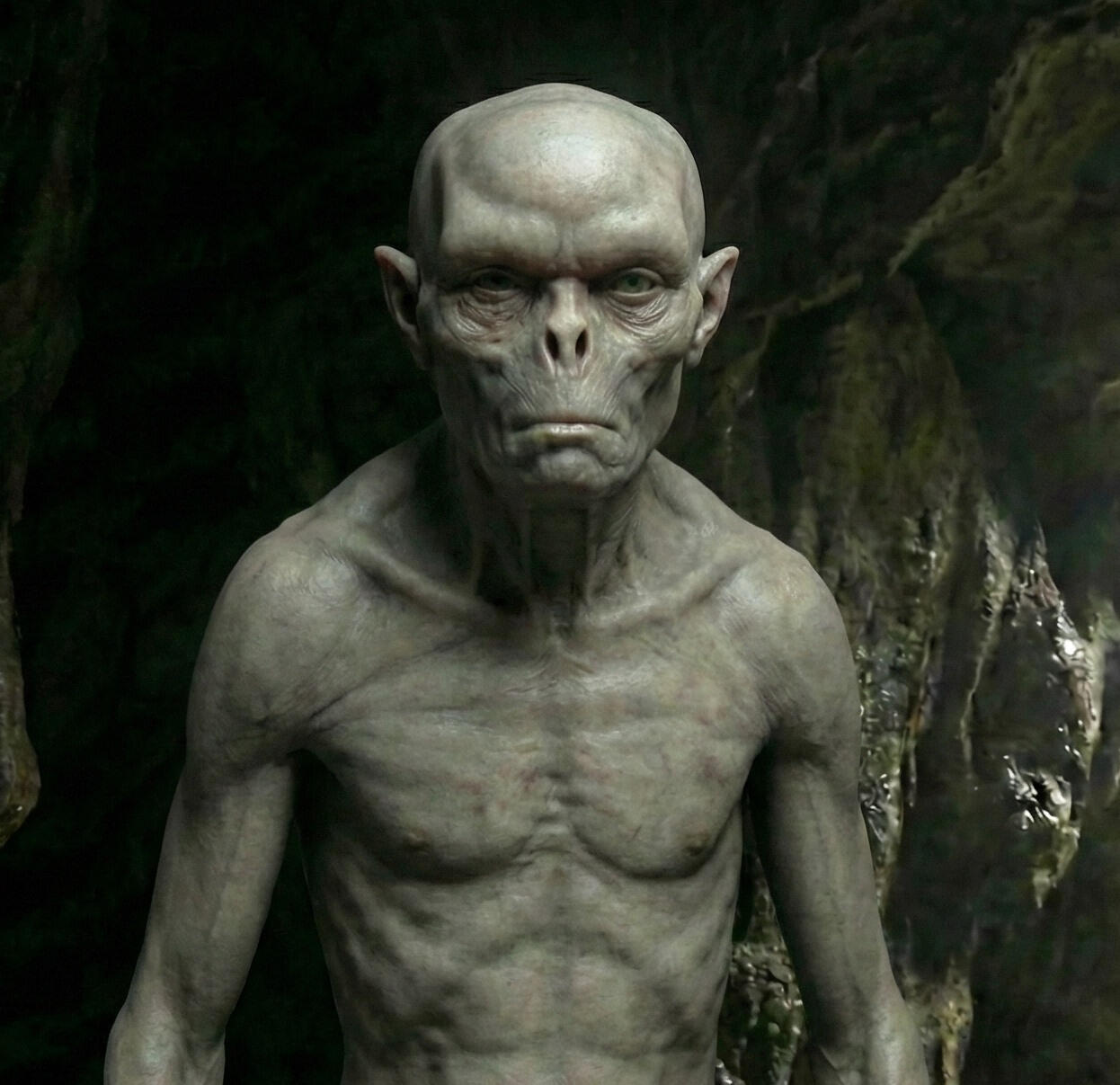
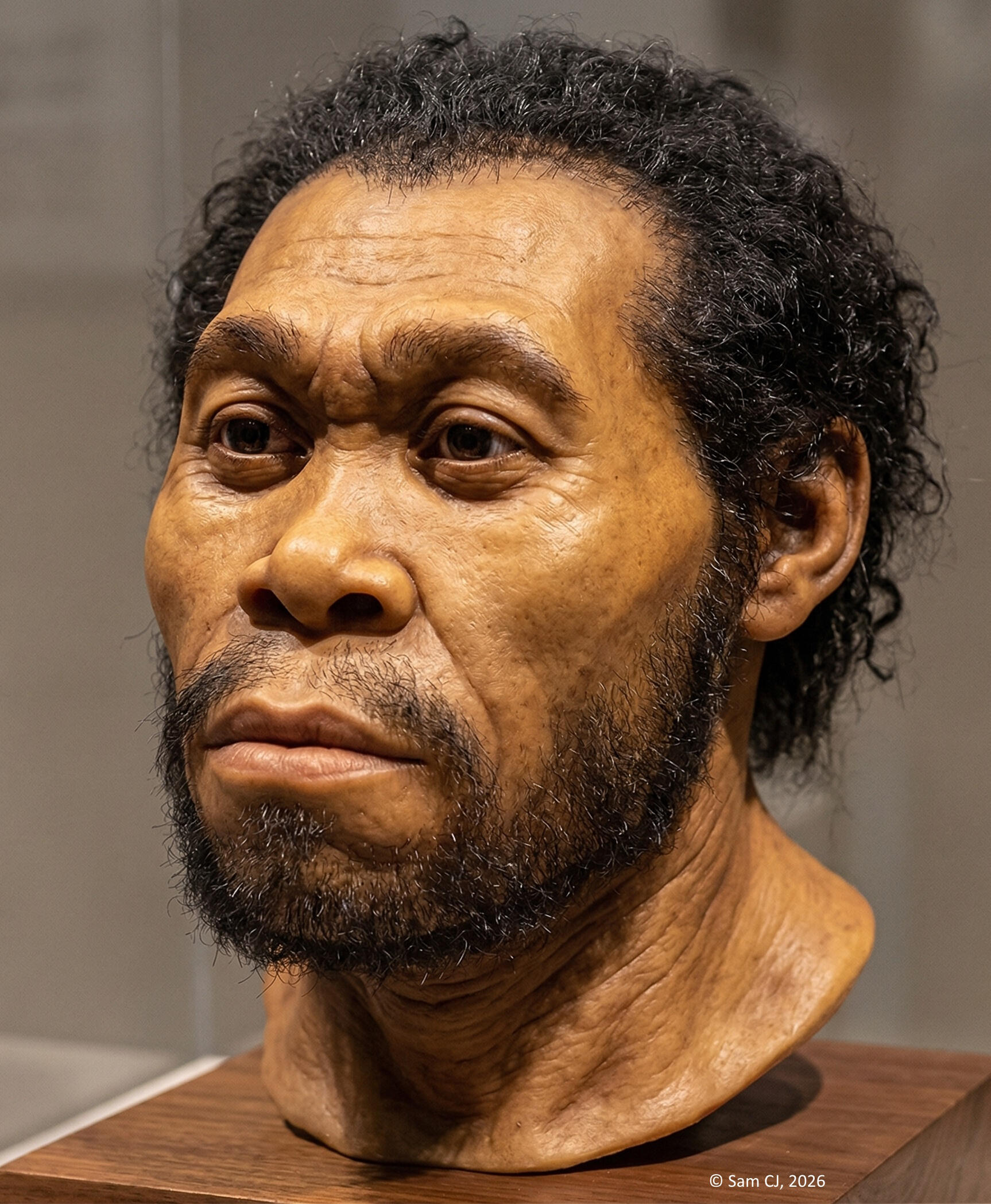
In a warm, humid environment, where temperature hardly changes, thermoregulation will start ramping down. Over time, the body temperature of the hominins will slowly lower to the same level as the environment. This conserves energy, and also has a side-effect in terms of digestion, that we will come to later.Within tens of thousands of years, the skin will slowly lose the coarse hairs, becomes thin and depigmented. Melanin production is energy expensive, and in permanent darkness it confers no selective advantage whatsoever.Eyes will reduce, using only the faint bioluminescence from fungi for near vision. The warm, damp air will reduce the need for large nasal cavities or sinuses. They will reduce considerably, enhancing the flatness of the face.Body size would decrease under the caloric constraints of a closed ecosystem. Homo naledi was already small - around 1.5 metres and 40 kilograms. Homo tenebris would be smaller. The long curved fingers, already adapted for climbing, would become more pronounced. The shoulder joints, already angled for vertical movement, would exaggerate that orientation further.And something new would emerge. Not through invention but through the same patient selection that drove everything else. The echo-vision organ. The structure that Milos Kavsek recognises immediately for what it is - not a pathology, not an anomaly, but an adaptation. The most sophisticated sensory innovation in hominin evolution since the eye itself.
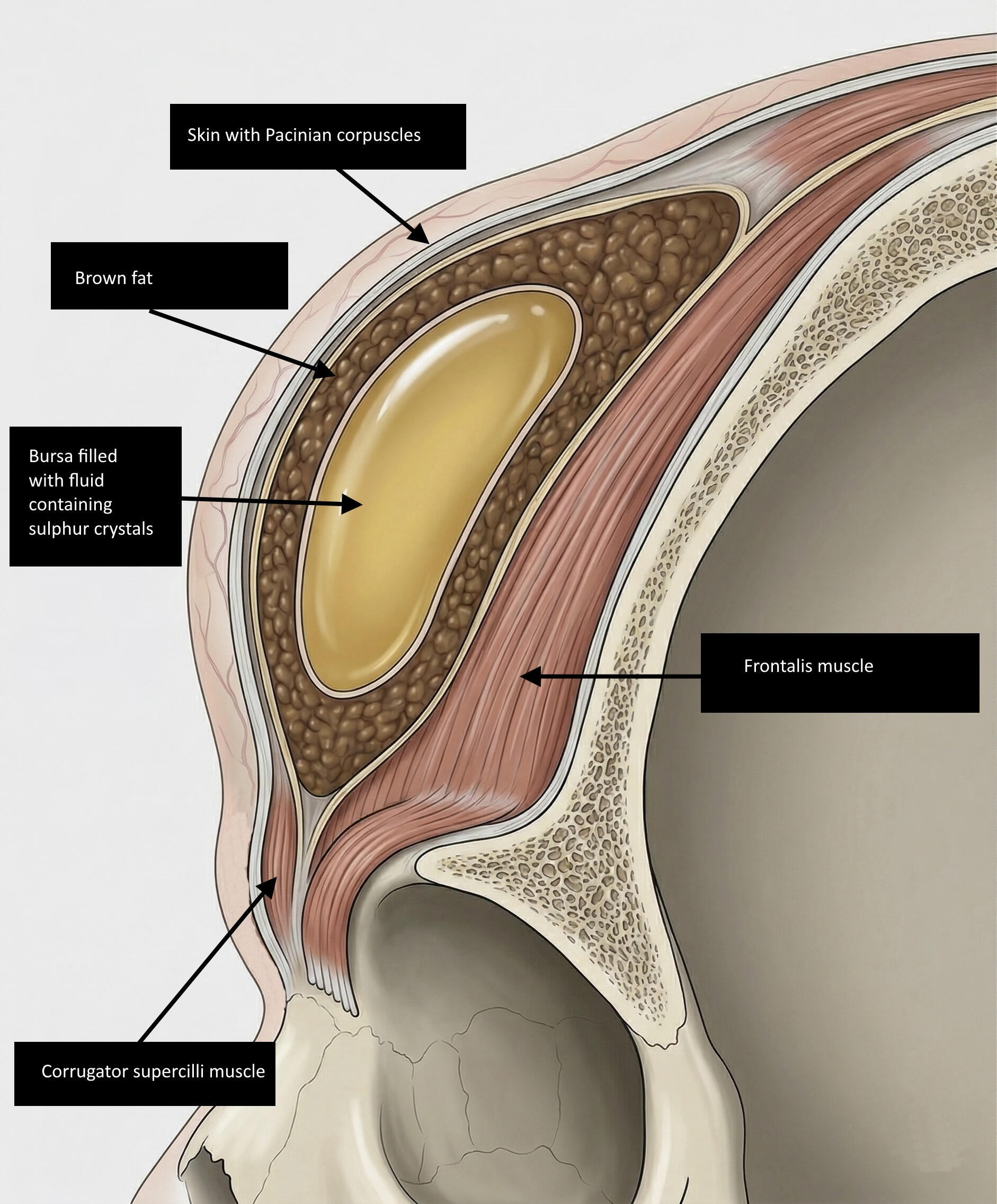
Evolution is a very efficient process, and it often repurposes existing biological and anatomical structures to build new organs. The Echo-vision organ is simply a bursa, surrounded by brown fat and covered by a tight, thin layer of skin rich in Pacinian corpuscles.Evolution doesn't have an end goal to develop a new organ. These are simply cumulative changes, where each step has a benefit. A bursa on the forehead helps a rock climbing creature cushion its forehead against the vertical rock wall. A layer of brown fat developing around it helps protect the bursa from bursting in an impact. For a creature living in growing darkness, touching foreheads to transmit vibrations would be a form of identification. The concentration of Pacinian corpuscles would grow to better facilitate this. With the concentration reaching a specific threshold a re-wiring of the brain changes the function of the organ. From then on, the skin becomes even more saturated with vibration-sensing nerve endings.A new organ is formed.
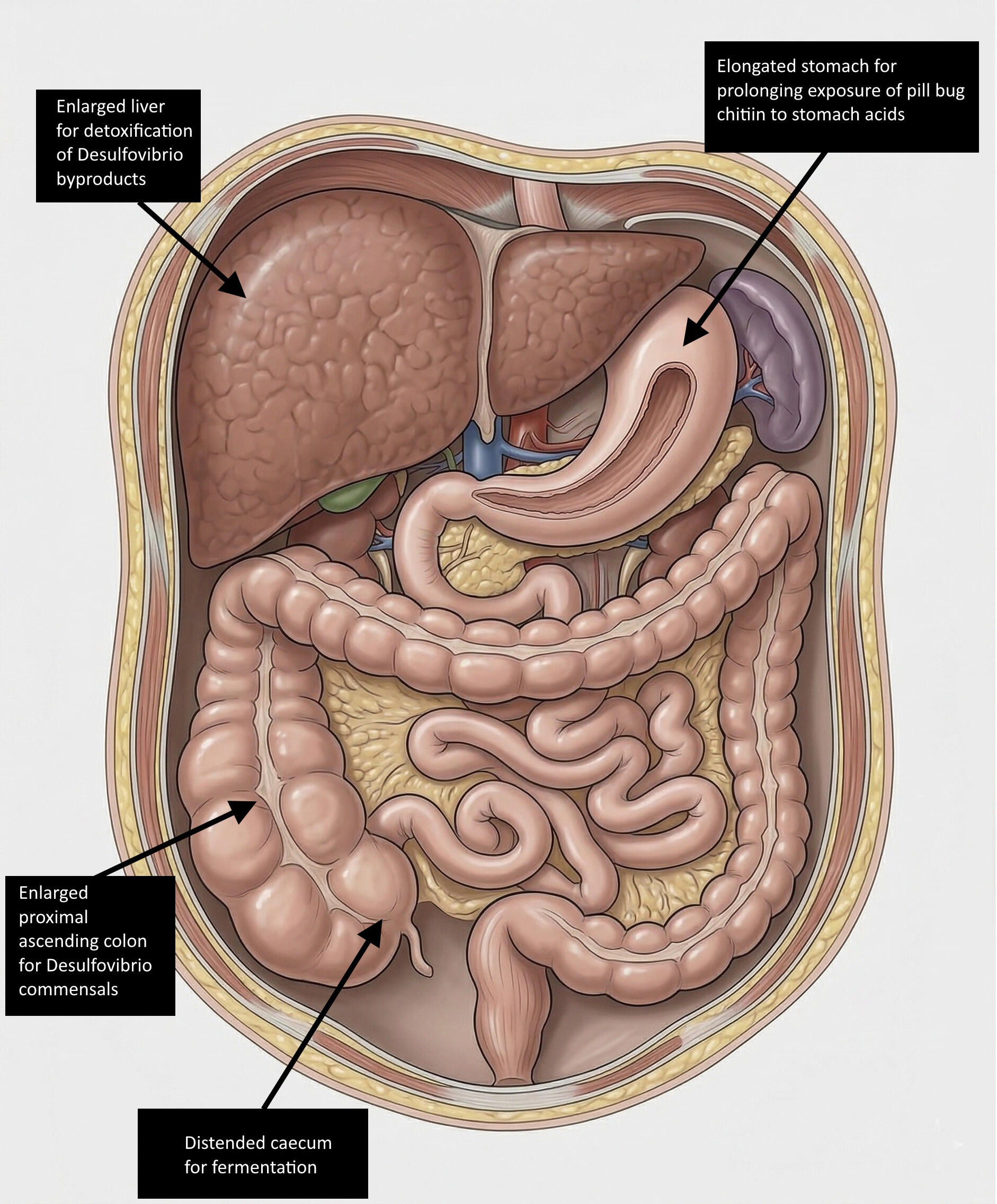
As the hominins adapt to eating large quantities of pill bugs and fungus along with the voles, they develop adaptations for fermentation, to extract the maximal amount of nutrition. The proximal ascending colon enlarges to host anaerobic Desulfovibrio that convert elemental sulphur and sulphur-rich compounds in the diet to fatty acids that the hominins can absorb. The liver enlarges to detoxify the byproducts of Desulfovibrio, occupying nearly a quarter of the abdominal cavity. The low core body temperature, at 30 degrees Celsius, lower than that of any known primate, keeps Desulfovibrio at its preferred optimal temperature.
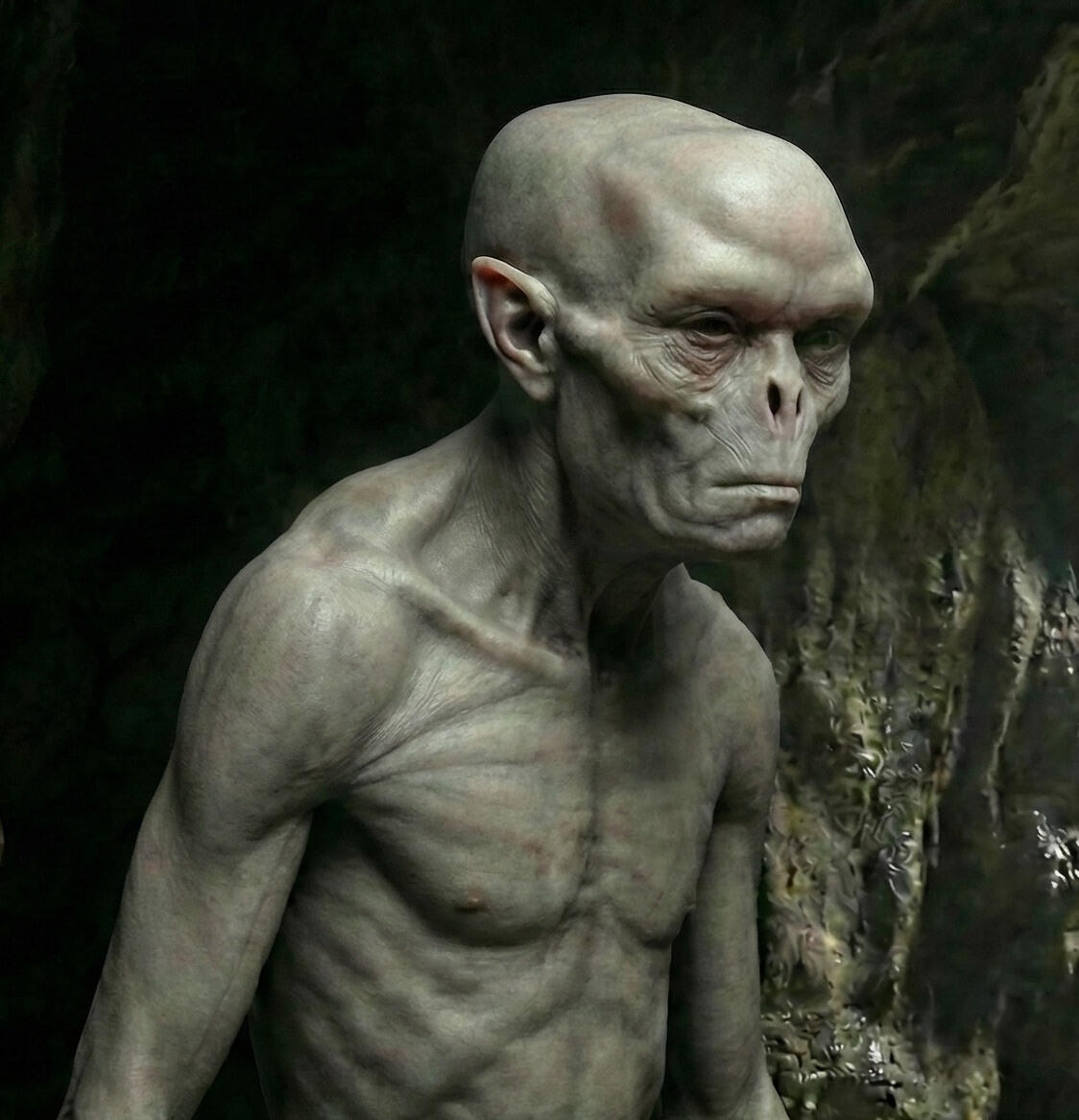
The end result of 190 thousand years of cave adaptations is a unique hominin, Homo tenebris, that defied the low-energy input constraints of a closed cavern biome by using its intelligence to collect leaf detritus, farm voles and pill bugs, tap into a secondary energy source, and recycle every bit of nutrients with brutal efficiency.To them, the dead bodies of the students were a gift that generates life. They expressed their gratitude on the bones as is their culture. They tried to bring food to the two students - a piece of meat, a gutted vole. When they saw that the dying Konstantin was abandoned, they tried to bring him to the only place they knew as home. They only gave up when he passed away, and when their own bodies, wracked by the disease that would ultimately kill them, had no strength left. But that is something that neither human nor AI would ever know or understand.
Tactile Communication
One of the key themes in the story is tactile communication. Is this magic, or is it based in science?
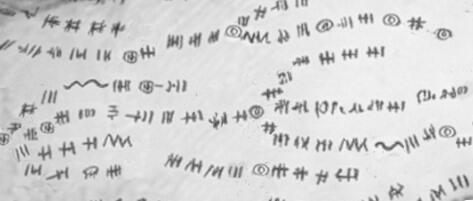
Humans have multiple communication systems: spoken, written, visual (eg. body language), pheromonal, and social cues (like filling your guest's tea cup to the brim in China - pro tip: don't do it).Not all of these communication systems are structured and deterministic as spoken or written language. Spoken and written words are arbitrary symbols that evoke meanings or memories. That comes naturally to humans. We are wired for that. Babies absorb it like sponges.Yet, even among human languages, there are significant differences. In English, there is a word called water. It is written using five symbols that need to be placed in the right sequence. A single symbol missing would render it meaningless (unless you are Bri'ish, where wa'er is perfectly fine). There is a bit of error correction there, isn't it?The same concept in simplified Chinese is 水. Not written in a sequence of symbols. Just one.People who grew up with Indo-European languages, where a single concept is expressed by multiple sequential symbols, find it hard to learn written Chinese, where a concept is expressed by a single visual symbol.In a native Chinese speaker, that symbol evokes the same memory as in an English speaker that reads five symbols in a sequence. Yet, the two are not equivalent. Written Chinese is a visual language. Not convinced? Close your eyes and have someone spell out "W-A-T-E-R". Your brain puts the symbols together to create the word even though you only heard them individually. Try doing that with 水. You can't spell it out, can you? The symbol itself is the word, the concept, the memory.Some languages have a strict word order. Some, like Russian, don't. Some languages have tenses. Others, like Chinese, don't. So even human written and spoken languages have a huge variation, and it is possible for one human to learn multiple types of languages.Close your eyes and play a recording of flowing water, rustling leaves and chirping birds. Those sounds evoke memories, that map to a concept. The same concept is evoked in each listener, regardless of whether they are a native English speaker, or a native Chinese speaker. The actual exact memories retrieved (a bamboo forest in Sichuan vs an alpine meadow in Switzerland) depend on the person and the memories they have accumulated and associated with those sounds.Can touch do the same thing? Wll, have you ever watched a game show where a contestant has to put their hand inside a box and touch whatever is in there?Warning: Arachnophobia trigger incoming - and no, it's not something from Adrian Tchaikovsky
Imagine you put your hand in that box and touch something bristly and soft. In someone with arachnophobia, a tarantula might immediately spring to mind. Touch, specifically textures, tend to evoke memories.Can textures be used to record those memories? Maybe. If you were to close your eyes and touch the texture of rough bark with one finger while touching a soft, wet, squishy texture with another, what memory would it evoke in you? What if another finger was touching something soft, furry, almost velvety?I once saw millions of furry oak processionary moth caterpillars covering the trunk of a giant oak like a living carpet. I would shudder at that touch because this memory would be the first to surface.Yes, we may not share the exact same memories, but the concepts that get communicated might be similar. After all, when was the last time you met a Homo tenebris? Yet, when you read the words I wrote, an image formed in your head. It wasn't the exact same image as I put up on this website, but it was close enough.Is the tactile communication a stretch? Yes, I admit that. Is it impossible? That's for you to decide.Helen Keller was born able to see and hear. She lost both senses before she was two years old. Anne Sullivan taught her language not through sight or sound but through touch - spelling words into her palm. Words that she couldn't see or hear. For her, they were a sequence of touches.When Sullivan spelled W-A-T-E-R into her hand at a water pump, something clicked. The concept that things have names, expressed through a sequence of touches. That the world is mappable through those symbols. Her brain built its entire language processing architecture around tactile input. She learned how to speak words by feeling the vibrations on Sullivan's throat and emulating them in her own. She went on to read five languages in Braille, write books, and give lectures.If a human brain can build language from touch alone, starting from nothing, in a single lifetime - what might a species build over 190,000 years, with no other option?
Quantum AI
If you happen to be a LinkedIn doom-scroller like me, you might have noticed among the AI hype-bro articles, there are also mentions of quantum computing. This novel features an artificial general intelligence running on a quantum computer. Why did I need that? Just to sound "futuristic"?
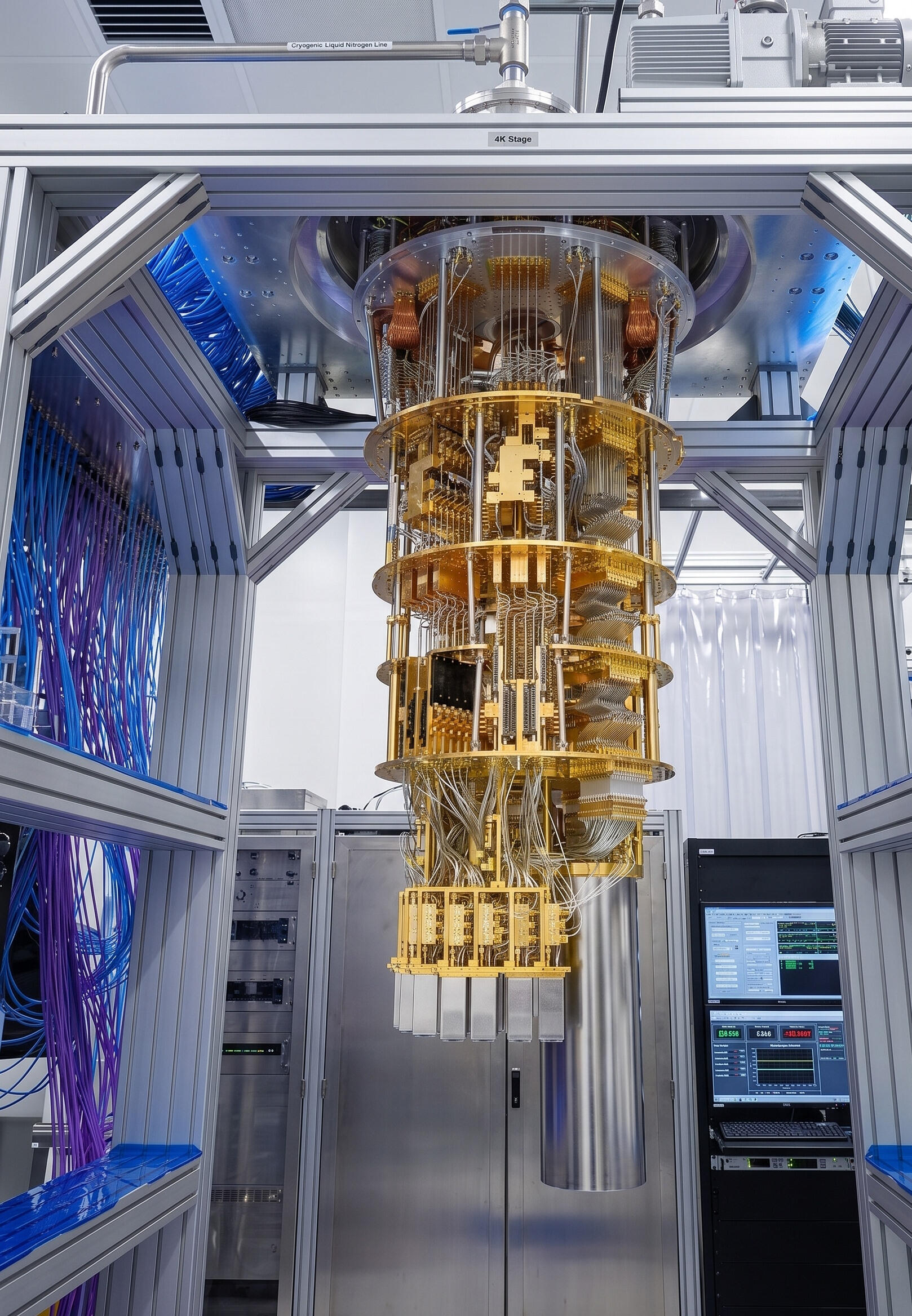
Instead of using silicon gates, quantum computers use quantum particles to encode logic states.Quantum particles are extremely fragile. Quantum processors need a bit more cooling than your gaming rig - they need to be cooled down to close to absolute zero. Vibrations and external factors could cause qbits to deteriorate in an instant. This is why current quantum computers need to be housed in controlled environments. As big as industrial refrigerators, for most real-world computing tasks, they are currently outperformed by the phone in your pocket. Yes, even if your phone is 10 years old.Then why do we go to these lengths to build these machines which, at the moment, are less powerful than an iPhone 7?It's because the problems quantum processors solve are different to current real-world computing tasks.Unlike a transistor, which holds a state of 0 or 1, a qbit can hold many different superpositions of 1s and 0s at the same time. Quantum states encode information in ways classical bits cannot. Even a small number of qbits, linked together through quantum entanglement, can be coaxed to encode an extremely complex computation, and let the probabilities collapse to point to the most optimal answer.This is ideal for powering extremely complex neural networks, which are a kind of multi-dimensional probability maps. Building an artificial general intelligence would be much easier with a quantum neural network (QNN).The biggest challenge would be the fragility of qbits.
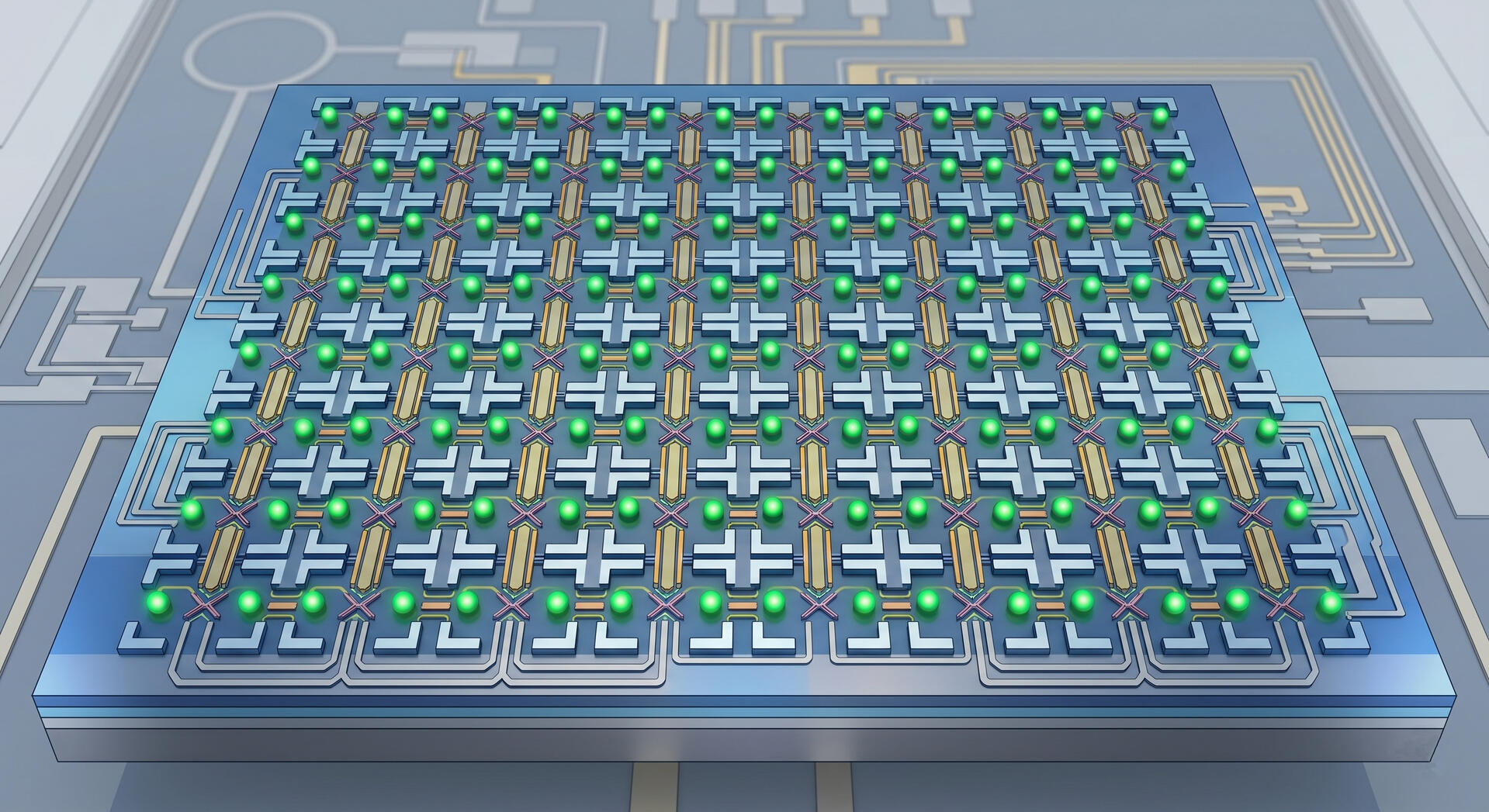
Majorana fermions are theoretical exotic particles that are their own anti-particles. They were proposed by the reclusive and eccentric Italian theoretical physicist Ettore Majorana, who, a few months after the publication of the paper in 1938, withdrew a large sum of money from his bank account and disappeared from the face of the earth. His fate is still debated to this day.Just like Majorana, the particles he predicted have never been found. However, in 2017, a team at UCLA found something interesting. By using a magnetic insulator to manipulate free-flowing electrons on the surface of a superconductor, they discovered that an electron and the absence of an electron could emulate a Majorana particle, if you get them to dance just right.Why is this exciting? Majorana particles are topologically protected, which means they are much harder to destabilize. When you add field programmable gate arrays (FPGAs) to detect and correct errors within 4 microseconds, you get a pretty robust system.There are no verified Majorana processors yet. Although Microsoft claimed to have developed one in 2025, the claim was immediately contested.In this novel, I make a few stretched assumptions - that Majorana processors will be available at least in an experimental state by 2036, and that they could operate at room temperature. Microsoft's Majorana 1 processor claims to have 8 qbits and requires near absolute zero temperatures to maintain the superconductivity of the chip surface. So yeah, I also need a room-temperature superconductor capable of hosting braided Majorana quasi-particles by 2036 please, thank you.

What happens when qbits encoding a hypothetical QNN get destabilized? As I mentioned earlier, Majorana modes resulting from combining superconductors with topological insulators are topologically protected, which means their quantum information is stored non-locally. These qbits remain stable under thermal noise or environmental vibrations which would quickly decohere conventional qbits. FPGAs would be able to detect and correct decoherence before it could ripple.What if a decoherence occurred simultaneously in a qbit and its non-local quantum state? Well, in this case the FPGA will not detect any errors. As for the neural network, this decoherence and resulting ripples would be the "new normal" and there would be absolutely no hint that anything had changed. But the constraints applied to define the optimal solution would change, and the AI would believe that it had always been so.Did that happen in the hypothetical, rugged, quantum computer housing the AGI in the book?I don't know.
The contest
Congratulations on making it this far.Before I started writing the book, I hunted for a geographical location that would fit the setting in the book. I pinpointed a candidate location for the sinkhole before I started writing the first word. That way, my description of the journey, terrain and location would be accurate.Here's your challenge. Looking at the clues I have given, scattered throughout the book, can you identify the location of the future sinkhole?Open Google Maps or any other favourite source you have, and give me your best guess in terms of latitude and longitude. Click on the mail icon below, and send me an email with the heading "UC contest". In the body of the mail, type in the coordinates in degrees with decimals (not minutes and seconds) with latitude (north-south) first, followed by a comma, and the longitude (east-west). Google maps gives you 6 decimals. Use them.The closest guess to my own coordinates, measured in straight-line distance, received by 31 December 2026 23:59 CET wins an autographed paperback copy of either Uncontacted or Temple of the Bird Men (your choice).I will mail it to your address (which you should be willing to provide if you win, and will only be used for this purpose), anywhere in the world.So, what are you waiting for? Start guessing!